Drafts, Drafts, Drafts
Thoughts on the Pistons' and Red Wings' drafts and the state of the offseason

If you like drafts, this past week was your week. The NBA and NHL held their drafts just three days apart and that provides plenty of new content that we can discuss. Both in terms of new players selected and trades that were made. For the Detroit Pistons and Red Wings, that latter part was just as important as the former, as we are now in a sort of midway point of the offseason.
The draft has occurred, as have some preliminary moves, and just a few days remain before free agency. Where are we at? What comes next? Today we’ll look at what has happened for both teams to date and where the summers go from here in a sort of offseason check-in:
The Pistons: Drafting and dealing
The Detroit Pistons ended up making two selections at the NBA Draft and have made two notable trades since I wrote about them a week ago. There’s plenty of news to cover and we’ll look first at the draft and then at the trades:
THE TWO DRAFT PICKS
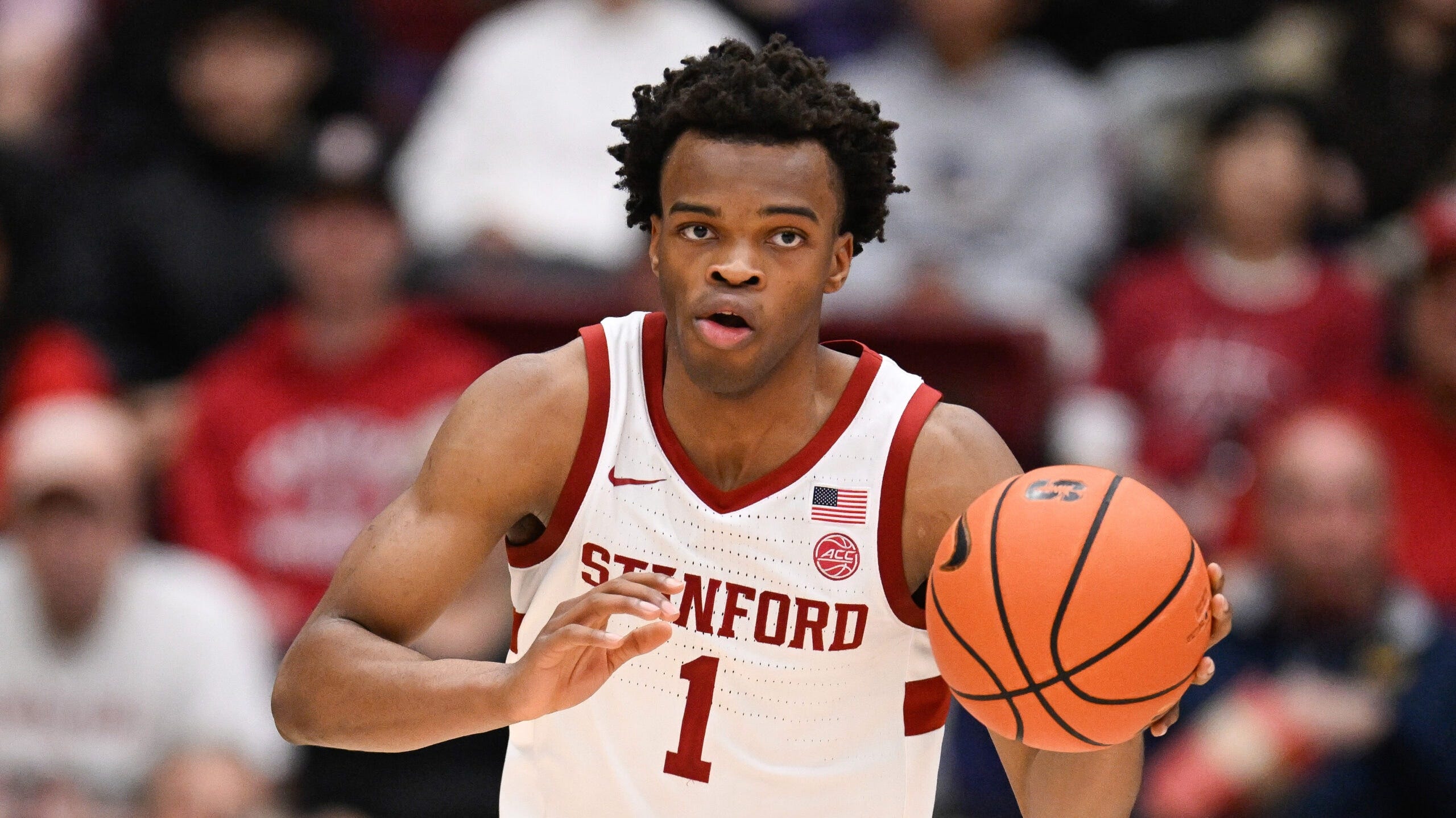
With their first selection in the 2026 NBA Draft, the Pistons did indeed select one of the guards that I wrote optimistically about in my piece last week. That is Eubuka Okorie of Stanford, who I was perfectly fine with when I reviewed the multitude of guards that seemed likely to be available at pick 21. As it turned out, he wasn’t available at 21, so the Pistons traded up to 17 with the Grizzlies to make the selection.
I like the idea of Okorie and the body of work he put together at Stanford was very impressive. That Cardinal team was bad and Okorie was their only glimmer of hope. Being forced to work almost entirely on his own, Okorie thrived in isolation as a freshman, which is rare to see. His 23.2 points per game led the ACC and his eight 30+ point games was the most by a freshman in conference history. I recommend this scouting report for a deeper dive.
Okorie’s ability to get into the paint and attempt shots at the rim is special. He’s twitchy and has great ball-handling ability to manipulate defenders on his drives to the rim. Synergy has him down for eight shots at the rim per game(!) and >5 of them came in the half-court setting. Okorie draws a ton of fouls, as you’d expect for someone who gets to the rim a lot. This tidbit from Sam Vecenie was great:
The list of high-major freshman guards to post at least a 44 percent free-throw rate, shoot 46 percent from the field and average 15 points includes James Harden, Alec Burks, Kyrie Irving, De’Aaron Fox, John Wall, Isaiah Collier and Eugene Harvey
Some pretty good names on that list. Okorie is also great at suppressing turnovers: there were 15 high major players in college basketball last season that played at least 40% of their team’s minutes and had a usage rate of >30%… Okorie’s turnover rate was the second-lowest out of those 15. To do that as a freshman is crazy (the only player with a lower turnover rate, Nick Boyd, was a senior).1
But wait, there’s more: Okorie’s assist rate was over 2x better than his turnover rate. Okorie’s ability to handle the ball almost all of the time he was on the floor for Stanford, yet seldom turn it over while still creating a good number of assists for his team, is something to behold. Even better, Stanford was helpless in the turnover department without Okorie. CBB Analytics had Stanford with an 11.9% turnover rate with Okorie on the floor and a 20.5% turnover rate without him on the floor.
[NBA.com]
For the Pistons, the appeal is obvious. As I wrote in the offseason preview, Detroit needed more players who can handle the ball and they needed more players who can create offense in the half-court. Okorie looks like he should be able to do that. His ability to get paint touches from the perimeter is a skill the Pistons lost when Jaden Ivey’s leg exploded and Dennis Schröder left in free agency.
Of course, there are concerns. Okorie is a small guard, leading some online to make a strange comparison to Marcus Sasser. Other than both being small guards, they don’t have many similarities in terms of play style. There are always reasons to be worried about small guards, especially defensively, but we shouldn’t treat it like an automatic death sentence. Jalen Brunson, Tyrese Maxey, Donovan Mitchell, Darius Garland, Kyrie Irving, Fred VanVleet, Collin Gillespie, and Jared McCain are all listed at 6’2 or shorter and Okorie is 6’1.25 without shoes, but his 6’6 wingspan will help.
Other concerns include the shooting, which I’m less worried about. Okorie hit 35% on 3s in college and was 38% in calendar 2026. He was also over 38% in HS and his free throw shooting is stellar. Okorie might not be a sniper but I think the shooting should be fine. Another question is the passing, which wasn’t bad but it wasn’t good either. Useless teammates, yada yada yada, but Okorie will need to improve as a passer and learn how to run an offense to blossom into someone who could play a big role. Otherwise he’ll just be an iso scorer and more of a one-dimensional offensive player.
Lastly, there’s the rim finishing. Okorie wasn’t a terrible rim finisher in college, especially at his size, but he wasn’t great either. He was 56.3% at the rim overall and 51.9% in the half-court. Again, the context of Stanford is notable because nearly 90% of Okorie’s shots at the rim were unassisted. But that is going to need to improve or we’ll get the Ivey conundrum again where he can get to the rim but frustratingly misses a lot of shots there and becomes rather inefficient as a scorer.
If those X-Factors of rim finishing and passing majorly improve, there could be a dynamite player in the Tyrese Maxey mold. Much more likely is that they improve marginally and Okorie tops out as a small and speedy guard who can get to the rim, handle the ball, and shoot it some. A solid rotation guard who comes off the bench but can close games, like Dennis Schröder.2 That’s still valuable to the Pistons! The team missed Schröder last playoffs and I would be happy to regenerate him in a younger form via Okorie.
As for the other pick, this one will be quicker. The Pistons selected (by trading cash for the 53rd selection) C Ugonna Onyenso out of Virginia, who I admittedly had never heard of on draft night.3 Onyenso’s main thing is he blocks shots, with the NCAA’s best block rate (17.4) last season. If you knew who Onyenso was without being a college basketball/Virginia/ACC fanatic, it was probably because of the show he put on stuffing Cam Boozer at the rim over and over in the ACC Tournament.
One theme with these Pistons draft picks is they were generally well liked by the NBA Draft online community, which tends to lean heavily into advanced stats to determine draft value. Okorie was a spreadsheet darling and so is Onyenso. Virginia had an excellent ORTG (131.1!) with Onyenso on the floor, despite his limited offensive profile. That, combined with his defensive dominance, gave him a BPM that was 13th in college basketball among players who played at least 40% of the minutes for their team, with many of the other players in that range of BPM being lottery picks.
The eye test reveals Onyenso needs a lot of his work, but his size and feel for rim protection is special. In general, I like taking players with one standout skill with these late selections because they have something they can hang their hat on. The rest of Onyenso’s game will need to improve because right now he can really only dunk on offense and he’s too lean to be an effective rebounder. His shot is very primitive and will need a lot of development too.
It’s probably best for Onyenso to begin with the Motor City Cruise in the G-League. If he develops a 3-point shot and bulks up while maintaining athleticism, there’s a world where he becomes a backup big. With the Pistons trading away one of their reserve bigs and the other down to the final year of his contract, taking Onyenso as a project big is an idea I like. Probably won’t be anything, but could be one day.
THE TWO TRADES
We also have a couple trades to discuss and they’re linked to the trade-up to select Okorie, since they involve the exchange of 2nd round draft picks. The first came on night two of the draft, when the Pistons shipped fan favorite C Isaiah Stewart to the Memphis Grizzlies in exchange for the three 2nd rounders they had given up in the draft day trade up for Okorie. Then, on Friday morning, the Pistons sent two 2nds to OKC in exchange for G Isaiah Joe.
The Stewart trade was one that we had heard was coming for some time. Beef Stew was healthy for the playoffs this time but unfortunately, he wasn’t very good. Stewart erupted for a barrage of blocks against Orlando in Game 2 but otherwise was pretty quiet, seeming to play at a slower pace and with less intensity than in the regular season. Paul Reed outplayed Stewart in the playoffs and with the Pistons set to pay Jalen Duren quite a bit of money, Stewart’s $15 M salary was a lot to spend on one position. Saving money by elevating Reed makes sense.
Some were shocked at how little Stewart garnered in return, but I think that reflects the expensive cost of a pure cap dump (the Pistons took no salary back in return). It might also reflect skittishness around the league surrounding the idea of trading future first round picks with the new, unpredictable NBA Draft Lottery format. Alas, the Pistons were only able to get those 2nds back.
I will miss Beef Stew in Detroit. He was a great culture guy and a perfect Detroit Piston: gritty, tough, no nonsense. Stewart helped turn the ship around for the failing Pistons and he was an enviable backup big these last two seasons. I am glad that he lands in another market famous for grit and grind basketball and I will be cheering for his success in Memphis. But ultimately, on a cost-per-production basis, Paul Reed at $5.6 M is a better deal than Stewart at $15 M and Trajan Langdon made the right call.
Getting a different Isaiah back was nice work. I noted Isaiah Joe, along with Aaron Wiggins, as a trade target in my piece last week. The Thunder are offloading contracts for cost-cutting reasons and Joe is a great fit for the Pistons. He’s played ~20 minutes per night the last four seasons, scoring ~10 points per game while taking ~5.5 threes per game and making them at a ~41% clip.
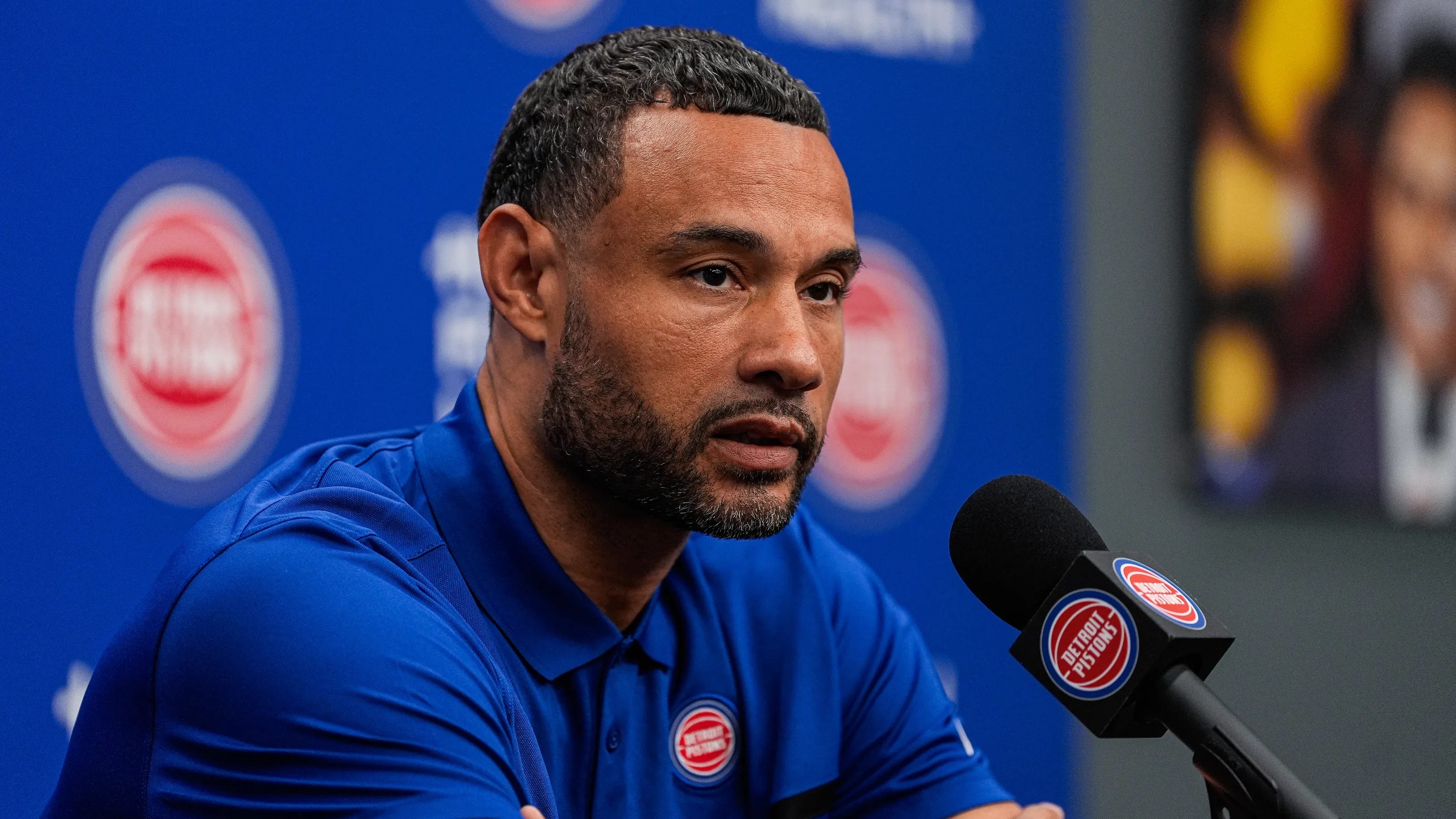
Joe is an elite movement shooter and if the Pistons keep Duncan Robinson, you can roll into next year feeling like you’ve finally replenished what you had in the 2025 playoffs when you had Schröder, Hardaway, and Beasley in Okorie, Robinson, and Joe. Joe should benefit playing next to Cade when their minutes overlap and he has two years on his deal at an affordable $11.3 M. For just two second rounders, that’s a very smart pickup by Trajan. The work is not done this offseason but that’s a good job tinkering on the edges and re-working the team’s bench.
[Junfu Han/Detroit Free Press]
WHAT COMES NEXT
This is the big question, eh? The Pistons have been connected to what feels like a zillion names, some of them big time names, but we still don’t know what direction this is headed. Reporting seems to suggest that the Pistons are at a stand-off with Jalen Duren. The center wants big time money and the Pistons know he’s not worth the max. The team reiterates that they want to reach a deal, while the reporting (likely leaked by Duren’s camp) says that he’s exploring a sign & trade.
The Austin Reaves S&T deal is out the window with AR-15 re-upping in LA and with many of the cap space teams absorbing salary already, I’m not sure what Duren has up his sleeve as a realistic landing spot. He can want max money all he wants but he has limited leverage as an RFA in this cap environment. I do think the Pistons want to keep Duren but is it possible they’re exploring possibilities that see him traded in a larger deal for a big time star?
Regardless of how the Duren saga ends, you can roughly set aside the money you think he would get and work on other positions. Despite lots of buzz surrounding Tyler Herro and Norm Powell, those rumors have faded some as the Pistons now have a lot of guards. Between Cade Cunningham, Duncan Robinson, Caris LeVert, Ebuka Okorie, Daniss Jenkins, Isaiah Joe, and Marcus Sasser, that’s just too many. Too much tied up in salary and too many mouths to feed.
Logically, what comes next is a deal that moves a couple guards out in an attempt to add more scoring and shot creation at the power forward position, since that’s the biggest hole on the roster. Trey Murphy III remains a 3/4 option who I like. Unfortunately, Troy Weaver is his GM and surprise surprise, Weaver is asking an unreasonable amount for a player on his team rather than focusing on accumulating assets for a rebuild. So long as the price remains sky high, I don’t think it’s happening.
Michael Porter Jr. from Brooklyn remains a possible fix, as he was at the deadline, but I haven’t heard much buzz about that. One name that I do like who might get moved is Aaron Gordon. Though the injury concerns worry me and he doesn’t bring offensive creation really, he defends hard, has championship experience, and has become a good 3-point shooter. The price to get him wouldn’t likely be sky high since Denver is just looking to cut salary. While not the splashiest move, I think he would be a good fit with the Pistons. If Denver goes the other route and jettisons Cam Johsnon, I don’t mind that name either.
They could also target a true wing, but I don’t see a move that strikes me as likely. Kawhi Leonard is said to have no interest in Detroit and the Celtics are setting too high of a price on Jaylen Brown for me. I also am just not a big Jaylen Brown fan. Even ignoring the rabbit hole of the analytics debate around Brown, I also just don’t like the vibes coming out of him. He’s crying about not being the star of his team and we want him to come in here and play with Cade? Seems like a bad culture fit to me and he also makes an obscene amount of money that handcuffs your ability to do other roster building. I’ll pass on that.
So, we’re in a bit of a waiting game to see what Trajan Langdon has up his sleeve. There are dominoes of some stature waiting to be tipped over, but I just don’t know what they are yet. Is it worth chasing a “star” who can score a lot just for the hell of it? Or should they just focus on a complementary power forward? Not everyone will be satisfied no matter which way they go and at this point I’m just curious to find out what it is they want to do now.
[Bruce Bennett/Getty Images]
The Red Wings: held hostage by #71
The Red Wings have been less eventful than the Pistons, making only one draft pick and one trade I feel like talking about, but there is a larger check-in necessary as the Larkin saga approaches one month. I will address those two pieces in separate buckets here:
THE DRAFT: An unexpected and welcome first round pick
The Red Wings approached the 2026 NHL Entry Draft without a first round pick due to the now-regrettable Justin Faulk trade. Red Wings fans were expecting to sit on the sidelines during Friday night, if they planned on watching at all. Until suddenly, at pick 23, the news struck: the Red Wings traded goalie Sebastian Cossa to Utah in exchange for the 23rd pick in the draft. Detroit was now on the clock.
We can break this down into two pieces. The first is the trade, in which the Red Wings formally threw in the towel on Cossa after five years of developing him. The Cossa saga is bizarre to me, which I mentioned briefly in the season wrap-up. I don’t want to turn this into a rehashing of the saga so I will just say that the Red Wings mismanaged the development of a prospect I was admittedly never super high on.
That the Red Wings had to make a decision on whether to promote a former 1st rounder full-time to the NHL or trade him, without ever having seen him play a few weeks in the NHL, is malpractice. Especially since the pro team had a goalie they would not use down the stretch this season (Cam Talbot). Why not call Cossa up to see what he can do? It’s true that Cossa never kicked down the door in the AHL and the list of goalies who came from pedigree but failed to reach the NHL by age 24 and later became good isn’t long. But it’s still worthwhile to call him up and find out what you have.
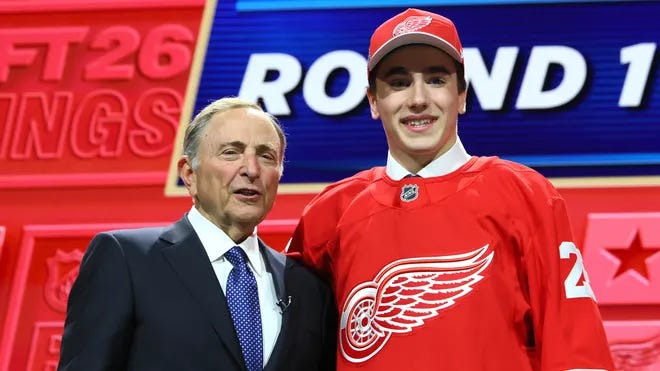
Instead, the Red Wings made their decision without needing to see Cossa in the NHL and traded him. All that said, managing to recoup the 23rd overall pick (Cossa was picked 15th) for a goalie who went five years without becoming an NHLer is good work in asset management. I was skeptical Detroit could get a first rounder for Cossa and I would probably say they made the right call. With the pick, the Red Wings selected forward JP Hurlbert out of the Kamloops Blazers of the WHL.
Hurlbert is a prospect I know a little bit about, as he’s a Michigan commit who will enroll at the university in the fall. He’s from a family of Michiganders but grew up in Texas and then played for the USNTDP. After the rule change was made allowing former CHL players to play college hockey, Hurlbert quit the NTDP and went to Canada, playing for Kamloops. There, he lit up the WHL this season, finishing tied for 4th in the league in goals and 4th in points.
Hurlbert is a high-upside, offensively skilled player. You know, the sort of player that the Red Wings have not drafted nearly enough under the Yzerman/Draper regime. Hurlbert’s lack of interest in competing in his defensive zone made him a divisive prospect among scouts, but there’s a world where the offense really translates and he follows a development curve not unlike soon-to-be-fellow-Michigan-teammate Michael Hage, who was picked around the same slot in 2024 by Montreal.
The Red Wings need to take big swings on offensive skill and upside. They don’t have nearly enough of it in the system or on the roster, so I am happy to assume risk in chasing it. If Hurlbert really hits, it’s a coup. If he doesn’t, oh well. The Wings already have plenty of polished, safe forwards who check both ends on the team that missing out on drafting one won’t be felt. I was admittedly surprised they made this against-tendency pick but am very happy they did.
THE HOSTAGE SITUATION
I had a thought on Friday night: free agency is only a few days away and I have no clue who the Red Wings will sign, if anyone. And even broader, the most critical point of the offseason is arriving and I have not the faintest idea what the front office thinks the goal for next season is. Why? The unresolved Dylan Larkin drama.
If Larkin were still happily a member of the team, we would understand the situation. The Red Wings would still be pushing to make the playoffs, basically at any cost. They would be going into July 1 looking to sign free agents to make them better or to swing some trades to help in that pursuit. But with Larkin in limbo, I have no idea. Are they hoping to trade Larkin for win now players to keep competing? Or are they planning to use the Larkin trade request as a bit of a step back and an organizational timeline reset?4
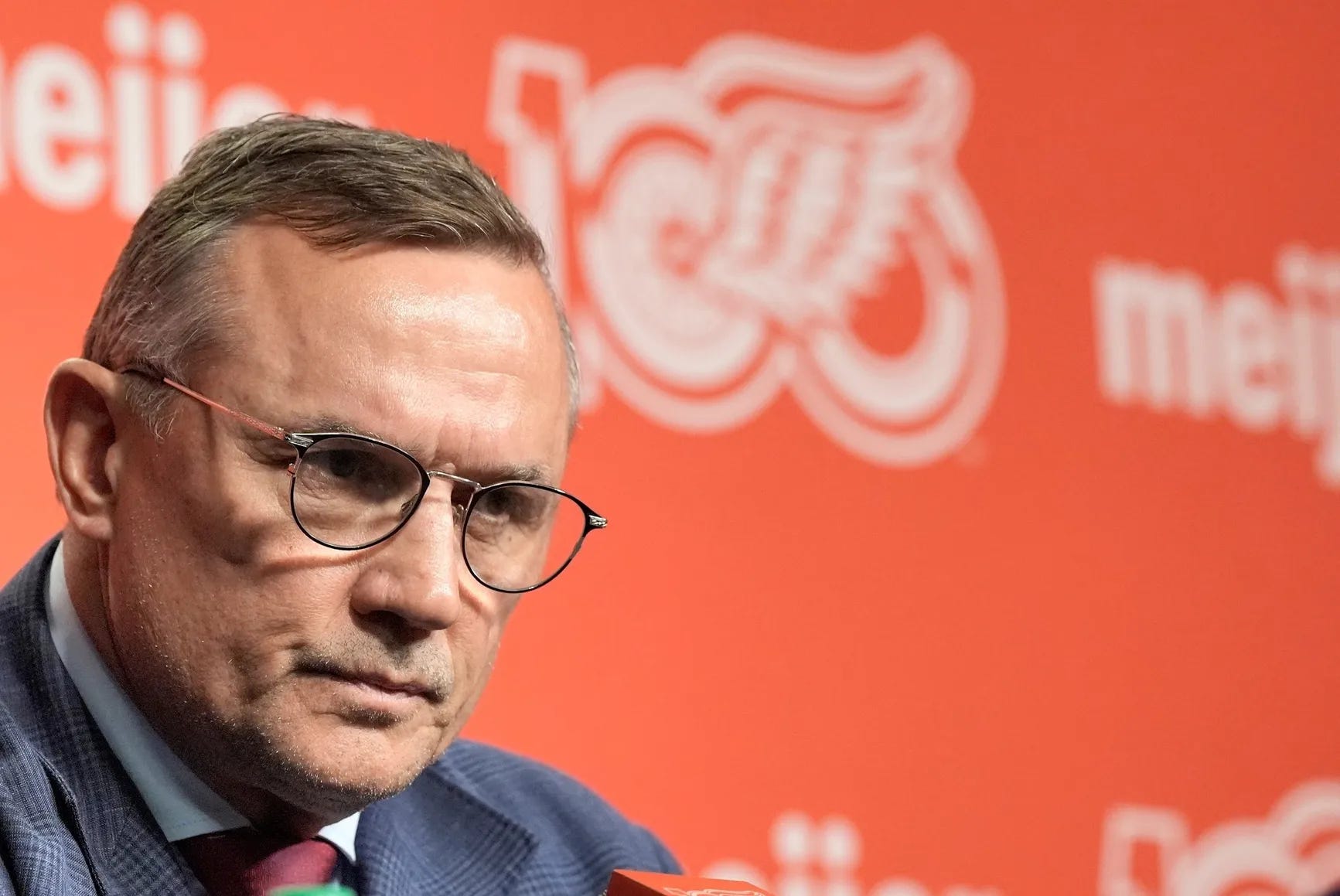
Steve Yzerman finally spoke on Saturday, and unsurprisingly, he said little of note. The situation continues but it grows more uncomfortable by the day. The past week has seen more player movement in the NHL than at any point in the last five years, with a number of star players being traded for sizable returns. But the Red Wings remain on the sideline, while possible suitors like the Florida Panthers have dropped out of the running due to making a different trade (in their case, for Brady Tkachuk).
The Red Wings remain somewhat frozen in place, waiting for something to happen with Larkin. I would hope that they have a plan or direction for the franchise which will allow them to operate on July 1 and not sit free agency out due to this uncertainty. But I also wouldn’t put it past the Yzerman regime to be slothful in a moment like this.
As it stands right now, the Red Wings can basically just call up prospects and run out a full roster if they wanted to even without Larkin. Michael Brandsegg-Nygård is very much deserving of a roster spot and at some point Nate Danielson needs to keep playing in the NHL too. They could just call those guys up and put that team on the ice without doing anything this summer. I don’t really get what the point of that would be, since it is neither another aggressive step towards looking to compete nor a step-backwards looking to recoup assets.
If Detroit puts that lineup on the ice on opening night they cannot claim to be trying to make the playoffs. FanDuel gives the Red Wings the longest odds of any team to win the Eastern Conference next year which feels fair to me as it stands now, though I might put the Rangers beneath Detroit. The team needs to get better to have a chance in hell of making the playoffs and right now they are still teetering on the edge of possibly losing the team’s best center.
[Detroit Free Press]
All the player movement of the past week made me consider not just what the Red Wings were missing out on in not trading Larkin to the numerous buyers, but what they were missing out on as possible buyers. Multiple deals went down in the past week, or may be going down soon, that are the very trades that we have said for years that Detroit would need to make to become a true contender. If Larkin were still on this team, this was the moment for Detroit to pounce and make big time moves.
Jason Robertson, a star offensive engine with ties to southeast Michigan, is on the trade block. Zach Werenski, Michigander, Norris Trophy winning defenseman, and Dylan Larkin’s BFF, long viewed by me as a dream Red Wings trade target, is also on the trade block. Jordan Kyrou, a fine winger who could inject speed and skill into this team, was dealt to the Washington Capitals. Alex Tuch, another speed and skill guy, was acquired in a sign & trade by Washington as well. Olen Zellweger, a creative young defenseman who I like, was dealt to Buffalo. There’s still the possibility of a guy like Elias Pettersson being traded too.
If Larkin were still a locked in as the captain with the goal of winning now, the Red Wings should be all over these kinds of deals. These were the sorts of trades that were absolutely necessary to get the team to contention in the next year or two. Instead, the Red Wings are unable to participate in any of them because their captain has quit on the team and a stalemate has ensued until a buyer steps up with a fair price.
In that way, it almost forces Detroit’s hand towards taking a step backwards, selling off Larkin for younger players and angling for a high pick in spring 2027. Because your hope of staying relevant in the East playoff picture is dwindling the longer you sit on the sidelines in a staring contest with your captain, while the competition grows mightier.
Detroit missed the playoffs this year and several of the teams who also missed have gotten better. Toronto did by adding Darren Raddysh and Gavin McKenna5, Florida did by adding Tkachuk, and Washington did by adding Kyrou and Tuch. Detroit has done nothing to get better and we’re at the point where I honestly don’t know if Patrick Kane is even coming back.
I don’t advocate caving and giving Larkin what he wants by trading him to a favorable destination for a subpar return, because this is the last thing I want to have happen. But man, I would also like it wrapped up soon. The longer this goes on, god forbid if it lasts into training camp or even the regular season, the more it sucks up all the oxygen around the team. The Larkin saga has already seemingly ruined an offseason; Yzerman can’t let it claim an entire regular season too.
This ship that is the Detroit Red Wings is looking more and more like a ghost ship, sailing aimlessly into the empty ocean while the other mercantile vessels around it continue on their regularly scheduled trading voyages. More than anything else, the Red Wings need a Larkin trade so they can move past this debacle and towards a new direction for the franchise. Whether that’s stepping back on the gas and trading assets to win now (not my, or most fans’, plan) or stepping back a bit to rebuild around Seider/Raymond (the general preferred plan), they just need something.
As much as I dislike the idea of trading assets to win now, an apparent plan and direction for the team is better than no apparent plan and direction. And as long as Larkin is still on the trade block, there is no apparent plan or direction.
Okorie was tied with another freshman, Darryn Peterson, who went 2nd overall in this draft
Okorie compared himself to Collin Sexton. I don’t love Collin Sexton the player but I like the comparison if only because I like when players show maturity by comparing themselves to more realistic players than mega-stars
One fun note on this draft class: both players the Pistons drafted are of Nigerian descent. Okorie was born in the US to Nigerian immigrant parents, while Onyenso is from Nigeria himself.
as I advocated for them doing back in early June
and by firing the clueless Craig Berube and hiring someone who seems like at least an average coach (Jim Hiller)