Never In Doubt
The Detroit Pistons are on to the second round

Nearing halftime of Game 6, I tweeted the following:


In other words, I was already beginning the post-mortem and subsequent offseason discussion. In fairness to me, it was pretty ugly for the Pistons. After falling down 3-1 in a series they were widely expected to win, they were snowed under during the 2nd quarter of Game 6 in Orlando. The Magic won the quarter 35-12 and would lead by as many as 24 in the first minutes of the 2nd half. The Pistons turned it over on their next possession after the Magic went up 24 and at that moment, ESPN’s GameCast gave Orlando a 97.9% chance of winning Game 6 and thus, the series.
If you followed the series at all, you know what happened next. Detroit outscored Orlando 55-17 over the final ~23 minutes of the game. After the Magic bumped the lead back up to 17 with 3:55 to play in the 3rd, they scored eight points in nearly 16 minutes to close the game. The Magic shot 4/37 from the floor in the second half and 3/35 if you pick it up from the Desmond Bane bucket that made the lead 24.
It was a Rutgers/Penn State-in-February level display of offensive talent but by an NBA Playoff team at home, in a close-out game. While up by 20+. Alongside Houston’s infamous 27 consecutive missed 3s in Game 7 of the 2018 WCF, this was one of the most humiliating offensive meltdowns in NBA Playoff memory. The Pistons rode Cade Cunningham’s 19 points in the fourth quarter to stun Orlando on home floor in a moment that, to history, will be remembered as the night when the Magic lost the series.
We still had to wait for Game 7 on Sunday, but deep down, everyone knew the Pistons were going to win after that. The first half was tight but the late surge from Detroit just before halftime gave the team the team an 11 point lead at the break. The lead never got closer than that margin in the second half, despite a small period where the Magic’s full court press whittled the lead back down late. The Pistons had the edge the whole way and completed the 3-1 comeback, the 15th team in NBA history to pull it off. Post-mortems and offseason talk will have to wait a couple more weeks at the earliest.
[NBA.com]
I was probably too confident coming into the first round, too dismissive of a fully healthy Orlando team when I picked the Pistons in five in my abridged preview before the series. I was on the fence between Pistons in six and Pistons in five but I went with the latter because I couldn’t shake the image in my head of how poorly the (fully healthy!) Magic had played in the season-ending game against Boston and the Play-In Game against the Sixers. I came to immediately regret my prediction.
As everyone during the series noted, the Magic are a talented team. They have already made their big “all-in” move by getting Desmond Bane for an incredibly steep cost. They are supposed to be ahead of the Pistons, both in franchise life cycle and in the standings this season. I put in my preview that most would’ve said, if told before the season that a Pistons/Magic first round series was a 1/8 matchup, that the Magic were the 1 seed in such a matchup.
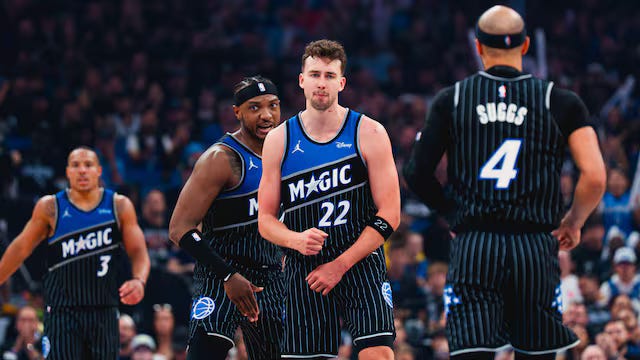
One of the simpler explanations for why the series was far closer than anticipated is the talent on Orlando’s roster finally played up to its capacity for a few games. Franz Wagner, when healthy, challenged Cade Cunningham with his stellar defense and hit some huge shots to close out Games 1 and 3. Wendell Carter Jr. was part of what gave Jalen Duren fits in the series, especially early on.
Jalen Suggs tailed off but powered the Magic to a win in Game 1. Desmond Bane was unconscious shooting the ball in Games 3 and 4. Paolo Banchero swung wildly throughout the series but had multiple awesome performances to show why so many still believe in him as a franchise player. Even some of the bench guys, like Anthony Black and Jamal Cain, had big moments in the series.
The Magic played like they’re capable of and it put the Pistons in a tough spot. I doubted that they would because they had 84 games to show they were capable of playing at that level. But it was always a possibility and it ended up putting a lot of strain on the Pistons. And the Pistons, of course, put a lot of strain on themselves.
The other explanation for why the series was closer than many thought is the unforeseen vanishing act of Jalen Duren. In my playoff preview I asked the question “is Jalen Duren worth $40+ M annually?” as one of the five biggest questions concerning the Pistons in the playoffs. At that point, I never thought I would spend most of the first round thinking “is he even worth $20 M?”.
Even if you were a Duren skeptic going into the playoffs (I had some concerns!), I don’t think anyone could’ve imagined that an All-Star and possible All-NBA selection would be unable to score even 10 points per game in the playoffs. Even if you doubted Duren’s scoring I’m not sure who could’ve seen a player who’s been an elite rebounder since he entered the league struggle to grab 10 rebounds per game in the playoffs. So much is riding on Duren in the playoffs given how this Pistons team is constructed and as his play slumped in the series, this Pistons team ran into the ditch.
You could say a similar thing about Daniss Jenkins, whose painful struggles early in the series also contributed to putting the Pistons in the hole they were in. Jenkins is, more or less, filling a job that was held by Dennis Schröder last playoffs. Schröder was a pivotal piece of the Pistons in 2025, hitting huge clutch shots late in games and playing in the closing time lineup. He helped lead the non-Cade minutes and took ball-handling duties away from the Pistons’ star.
A lot was on Daniss’ shoulders to fill that job and when he struggled massively, I suppose it shouldn’t have been surprising that the series unfolded as it did. These struggles were also much more foreseeable than Duren’s, considering that Jenkins is playing in his first playoffs in his first season in the NBA after having been a G-League/Two-way player to begin the year.
Cade Cunningham ran into problems too. The spacing issues were evident and as Orlando packed the paint and Jalen Duren vanished, more responsibility fell on his shoulders. In Games 3 and 4, his turnovers nearly sank the Pistons’ season. Some were forced by the lack of spacing he had to work with, reminiscent of his first few years in the NBA. But a number were just lazy, careless, or imprecise. The two odd-man rush transition chances he blew by throwing bad passes in Game 4 hang in my memory, as do several half-ass attempts to enter the post to Duren.
Other Pistons starter contributed to the trouble the team found themselves in, including Tobias Harris struggling to hit threes in the first six games of the series, which was another X-Factor. Duncan Robinson was hunted on defense, a problem that was foreseeable. And the rest of Detroit’s depth, be it Caris LeVert, Kevin Huerter, or Ron Holland, failed to make an impact.
All of this together, Pistons players shrinking from the moment (some foreseen, others unforeseeable) and making mistakes, combined with Orlando’s players elevating, created a tough series. The potential was always there given how the two teams measure up on paper. But thankfully, that lack of Dawg that the Magic had displayed all season which made me too bullish on Detroit’s chances pre-series showed back up just in time to rescue the Pistons.
[ESPN 690]
Some will say that the Pistons won this series because Franz Wagner got injured. I think there’s definitely a case for it. Wagner was by far Orlando’s best defender against Cade Cunningham1 and Cunningham is why the Pistons came back to win the series. If the Magic have Wagner for all three of the final games, the idea that they win one and close it out is very plausible. But I don’t know that it’s certain. What I do know is that history doesn’t tend to remember these things. When kids of the future look back in the NBA record books they’ll just see that Detroit beat Orlando 4-3.
The NBA today is increasingly a war of attrition. Who can get through each round healthy enough to survive? And Detroit was healthier than Orlando. I also feel like it’s fair to note that Wagner’s injury isn’t really a “fluke”. Wagner missed 48 games in the regular season (and missed 22 games the year before). That he missed 3 of the 7 games is, to some degree, an accurate representation of the 2025-26 Orlando Magic.
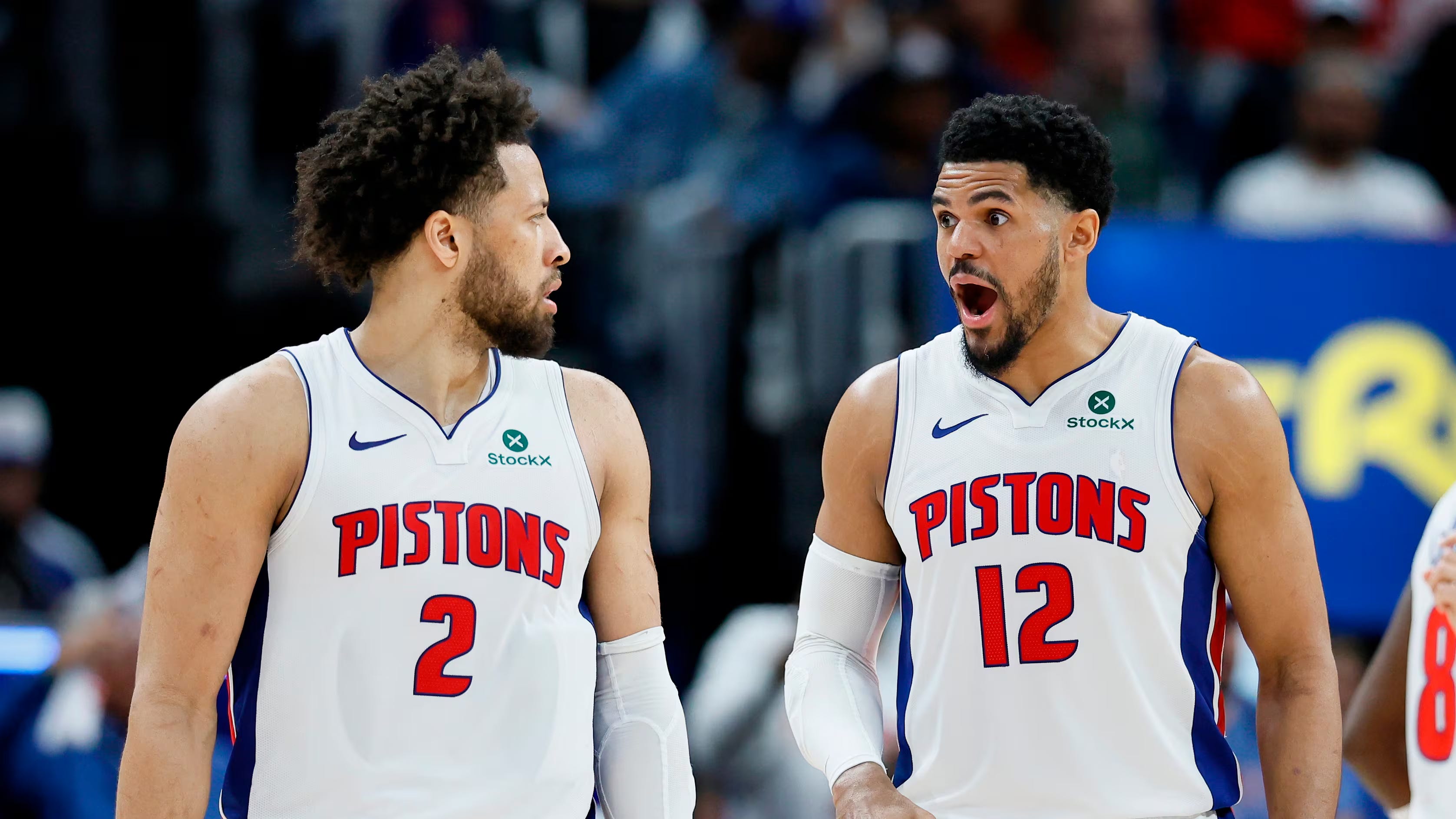
And yes, Wagner’s injury did make life much easier on Cade Cunningham. If this is the section of the piece that talks about why the Pistons won, Cade is most all of it. My question on Detroit’s franchise player in my 5Q/5A was “Can Cade Cunningham be the best player in the Eastern Conference Playoffs?” and after one series, I’d say he probably was. The only guys with arguments for me in the first round in the East were Scottie Barnes of the defeated Toronto Raptors and Joel Embiid for the Sixers.
Cade finishes the series having scored 32.4 PPG, 7.1 APG, 5.7 RPG, and 1.72 stocks/gm2 on 60.2% true shooting. In the final three games, it was even better at 36.3 PPG, 6.7 APG, 5 RPG, 2.7 stocks/gm on 68.3% true shooting(!!). Cade had a ridiculous +24.0 on/off split in this series and it was most pronounced in Game 7, when the Pistons couldn’t even get the ball across half-court before turning it over when Cade sat.
The Pistons depended on Cade for everything. Despite just having returned from a collapsed lung, playing with what appeared to be a flak jacket strapped to his midsection, Cunningham authored his first signature playoff moment. The combination of 45 in Game 5 to barely outduel Paolo, followed by 19 in the 4th quarter (with 4 steals!) to lead the epic comeback in Game 6, followed by 32 and 12 with a +29 in a Game 7 win, is the first stepping stone for Cade to enter the Top 5 in the NBA conversations.3
Cade found his three-ball late in the series, shooting a blistering 61% from 3 in Games 5-7 to finish at 40% for the series. As I said before the playoffs, people always say that the shot is the trait that takes the longest to return from injury and maybe Cade was rusty after all the time off. But in the period before the collapsed lung, his shot had been in rhythm. A Cade Cunningham that hits 37-40% from 3 could have an argument to win an MVP one day.
The flip side of “smooth operator” “Cade Icewood” is the casual, nonchalant turnovers where his game seems to lack intensity, as I talked about in the prior section. It wasn’t good enough in those two games, but he brought the TOs down to 6, 4, and 4 in the last three games, closer to his regular season rates from this year per 36 (which was his best ball-security season in the league). Considering the lack of spacing, lack of a true second option, and the astronomical usage on his shoulders4, you can live with Cade sitting at 4-6 turnovers if he’s playing ~40 minutes. It just can’t be 8 or 9.
We got Peak Cade when it mattered, the efficient scorer who is hitting 3s and taking care of the ball. That Cade is the best player on any of the four remaining teams in the East playoffs. But we also have to talk about the performance of Tobias Harris in this series and especially in Game 7. Yes, it took until Game 7’s 5/7 showing from 3 for Uncle T to find his stroke from deep, but his isolation scoring in the post was essential all series long. If you sub out Tobias Harris on this roster and replace him with Marvin Bagley, the Pistons might not have scored 75 points in most games.
Tobias put up 21.6 a night on 35.4 minutes, shooting 53% on his twos and grabbing an important 8.1 rebounds per night, while giving it his all on defense. He was so crucial all series long on offense for the Pistons and then, when it mattered the most, Harris delivered a legendary Game 7 for Pistons lore. 30 points on 11/18, 5/7 from 3, 9 boards, 2 assists, 3 steals, 1 block, only 1 turnover and +22 in 36 minutes played.
It’s hard to say enough good things about Tobias as a Piston. For all the hate he got in Philly, he will be a hero forever in Detroit. Two really effective stints with the team, the second one coming as the franchise hit arguably its lowest ever point with the 28-game losing streak/14-68 Monty Williams disaster. They needed a veteran to provide leadership and some scoring to take the load off Cade. Tobias needed a change of scenery after Philadelphia and the Pistons provided that. It was the perfect marriage and he’s been nothing but pure class in both stints. Pistons cult hero, forever.
Beyond those two, Ausar Thompson has to be mentioned. After JB Bickerstaff yet again made the fatal mistake of not playing Ausar enough in Game 1, he learned his lesson and Ausar played at least 32 minutes in each of Games 3-7. The result was defensive dominance. Only twice did Ausar score in double figures but it doesn’t matter. He grabbed nearly nine rebounds per game, including 3.6 offensive rebounds per game. Ausar averaged 2.3 steals per game AND 2.3 blocks per game for a ridiculous 4.6 stocks game.
Ausar joins Robert Horry and LeBron as the only non-bigs in NBA history with 16+ blocks and 16+ steals in a playoff series… and he’s done it twice in two career playoff series. He still needs to improve on the offensive end, sure, but Ausar Thompson is quite possibly a generationally talented defender from the wing position. I know, his defensive impact will never overtake Victor Wembanyama but what he does as a perimeter defender has no parallel in the NBA. Ausar is a game-wrecker in every sense of the term on that end. Play him and you win games.
Finally, they weren’t good in Games 1-6 but Daniss Jenkins and Jalen Duren, the two biggest playoff droppers on the team up to that point, delivered in Game 7. Duren battled back to neutralize Wendell Carter in Game 6 and finally, in the final game, he feasted. 15 points, 15 rebounds, +27, excellent defense. Jenkins finally got his shot going, hitting 4 of 5 from three (including the 3rd quarter buzzer beater) and managed to play 28 minutes with a +5. It’s not perfect for either player, but it’s way better. And when you have a superstar playing like an MVP, a gritty veteran punching in, and a defensive terror wreaking havoc, it was enough.
[NBA.com]
Takes on the Cavs?
I don’t have time for a proper preview of Cleveland here, but I’ll share a few overarching thoughts I have. It’s an interesting series for the Pistons and one that most analysts seem to think is going 6-7 no matter who they have winning. The small tilt seems to point towards the Pistons among prognosticators but definitely in the range of tossup. Truthfully, I don’t really know who I would pick.
Before the playoffs, I didn’t think this was a good matchup for Detroit in large part because of the regular season performances. The Pistons played the Cavs four times this year and though the teams split the four games, I would say that Cleveland got the better of Detroit. The Pistons struggled to beat a massively shorthanded Cavs team in Detroit at the end of February, although that was during arguably Detroit’s worst stretch of basketball during the season.
After the two matchups in late Feb/early March, rumors started leaking out about how much the Cavaliers wanted to play Detroit in the playoffs, how confident they felt that they could handle the Pistons. I think they have the right to be somewhat cocky but I also like how it gives the Pistons a chip on their shoulder. This team seems to play their best out of spite (see: matchups with Charlotte and the Knicks) and hopefully that carries over here.
The cockiness of the Cavs does feel a little unjustified. Their confidence in how they played the Pistons is deserved, but it’s not exactly like this Cavaliers team has the LeBron era playoff success to hang their hat on. Like the Pistons, the Cavs didn’t play particularly well in the first round, as they got pushed to the limit by a Raptors team down two starters. It was expected to be a fairly simple series for Cleveland, but Toronto gave them everything they could handle for 6.5 games before finally unraveling at the end of Game 7.
Which fits into a broader pattern of this era of Cavaliers basketball under-achieving in the playoffs. In 2023 the team was the higher seeded squad in the first round matchup with the Knicks. The series was viewed as a tossup but Cleveland lost in five games. The next year the team was again the higher seed and did manage to outlast the Magic in seven games before feebly bowing out against eventual champion Boston in the next round.
The playoff performances weren’t good enough for the Cavs’ front office, so they canned coach JB Bickerstaff and replaced him with Kenny Atkinson. Atkinson guided the Cavs to the best record in the East at 64-18 but they were stunned in just five games in the second round by Indiana. When you add in a first round series against Toronto being much tougher than expected, these Cavs have been something of the opposite of “playoff killers”.
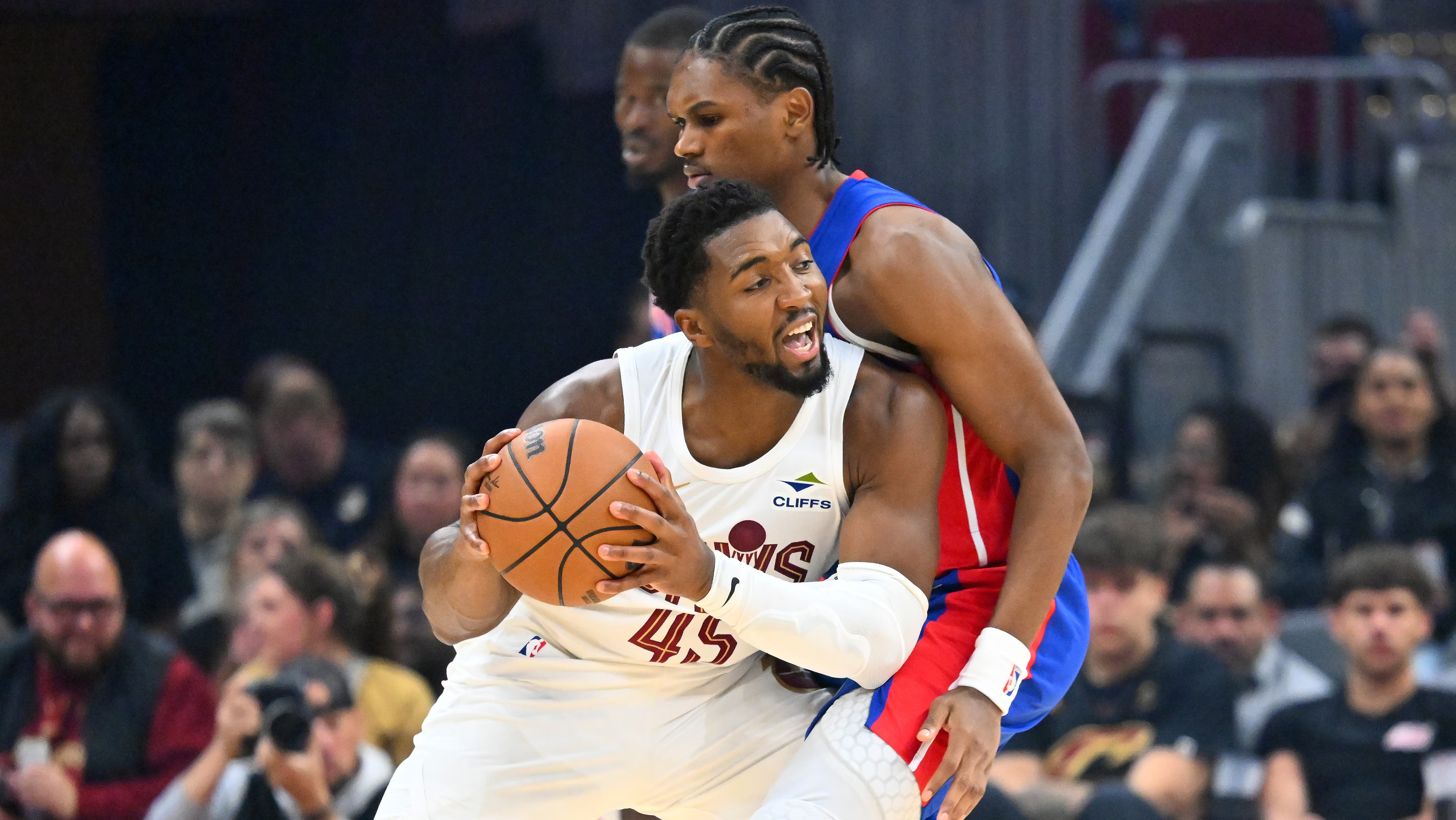
On paper, Cleveland’s roster is better than Detroit’s. They’ve got a star-studded backcourt in Donovan Mitchell and the newly acquired James Harden. They have last year’s DPOY in Evan Mobley. They have a solid center in Jarrett Allen and tons of shooters to complement the core, plus old friend Dennis Schröder leading their bench unit. They’re more experienced and have a far more expensive roster, actually checking in as the #1 team in payroll this year. With Mitchell approaching 30 and Harden well up there in age, it’s now or never for this version of the Cavs.
[NBA.com]
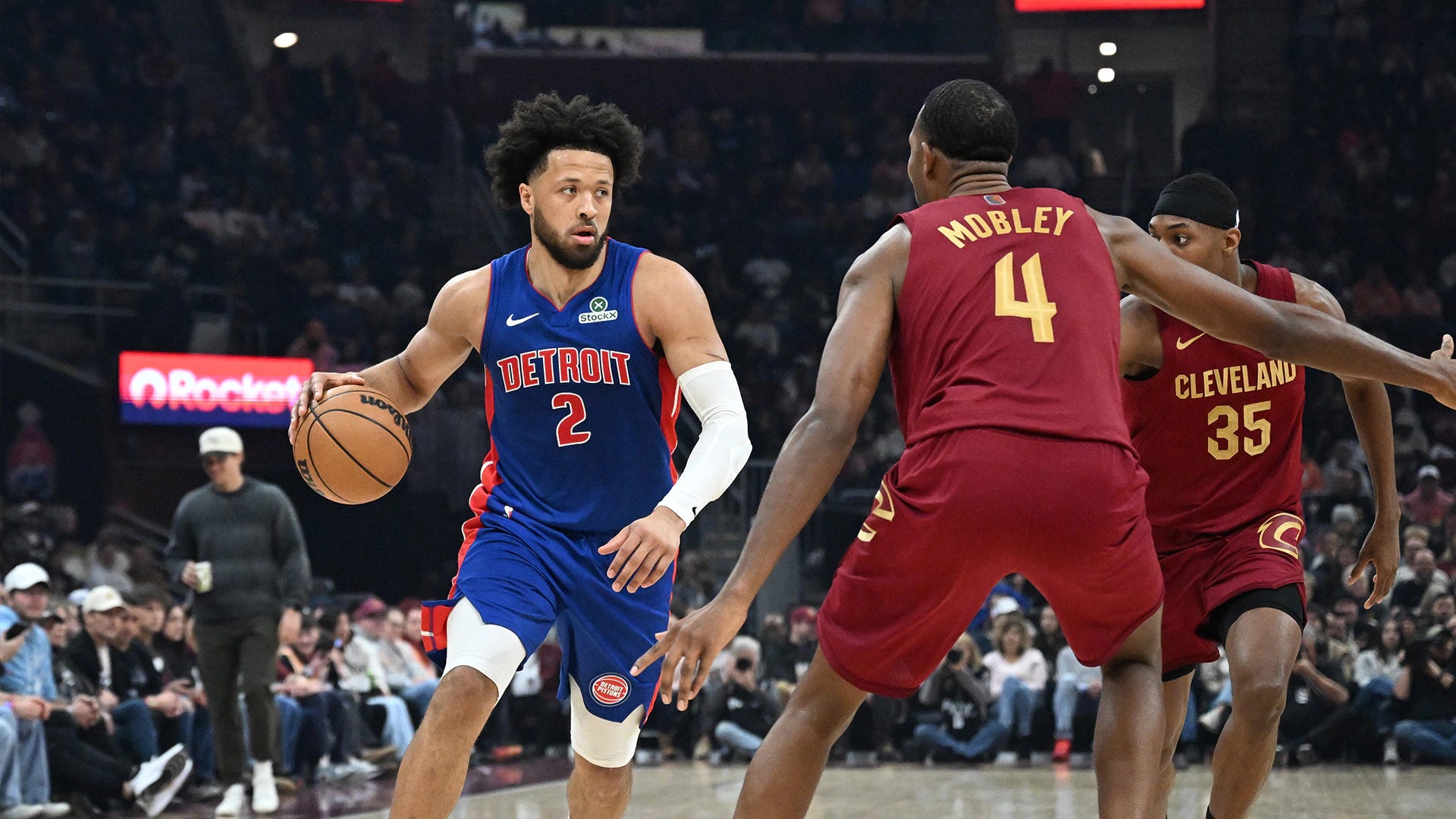
That pressure could allow the Pistons to play a little looser, who I think should have the physicality edge. They also should have the best player, though with the caveat that Cade Cunningham did not play well against Cleveland this season. He shot 39.1% from the floor in those four games and 3/18 from three. The Pistons lost his minutes in three of the four games and his scoring was only 18.5 PPG in the four matchups. Whether Dean Wade or Jaylon Tyson or whoever else Cleveland has guarding Cade really have the answers for Detroit is a big question for this series.
So is Jalen Duren, who is looking to build off Game 7. He played very well in the last two meetings against the Cavs, who did feature a healthy front-court. Where Duren was 20 lbs. lighter than Wendell Carter, he’ll have a small weight advantage against Allen and a large one against Mobley. That probably plays to Duren’s advantage. We should also point out that while the Pistons have struggled to guard Donovan Mitchell over the years, they gave James Harden hell when they saw him against the Clippers and then the Cavs, holding him to 19/60 shooting(!) with 13 turnovers in 3 games.
The Pistons will need Daniss Jenkins to feel more comfortable in this series and he did have one of his best games of the season in Cleveland back in January. I think this is a series where we will see more Ron Holland, because his length could be much needed against Cleveland’s guards. The same for Kevin Huerter, if he’s healthy. I also think we could see some double big lineups with Duren and either Isaiah Stewart or Paul Reed against Allen/Mobley. The chess match will be very interesting.
Above all else, I think it’s worth keeping some perspective in this series. If you wind the clock back to the start of the year and told Pistons fans that the team would (1) substantially improve on their regular season record and (2) win a playoff series, everyone would’ve said “wow, successful season.” The vibes were iffy coming into the year after a rocky summer that saw the loss of Malik Beasley under bizarre circumstances and the controversial Caris LeVert signing. What the Pistons have done since is far exceed reasonable expectations for the second year in a row.
As my tweet at the start of the article said, Trajan Langdon has always framed this season as a sort of trial run for see what this group is made of. I don’t think that’s a bad take. As this team is currently constructed, I could see them beating Cleveland and then the Knicks/Sixers, but it’s extremely hard to see them beating OKC in the Finals (just using them as the example since they’re the favorite in the West). The team isn’t there yet. It needs more pieces to help its shooting, spacing, and offensive creation.
The biggest reason I wanted the Pistons to beat the Magic, besides the general thrill of winning a playoff series, is it would give us another case study to evaluate the team. Lessons were learned against the Magic but that’s just one matchup. The Cavs are a new team with new players and now we can see if trends hold or reverse. I think the Pistons can win this series but I’m not losing the longer term view.
The Pistons have a budding superstar who is 24 years old. The focus should be on building a championship-ready for when Cade is at his apex. This series will provide another window into what is needed to reach that point… and hopefully it includes a series win over a historic rival because that would be fun.
Though Cade did drop 39 on him in G1)
Someone asked me in the last piece about the definition of “stocks”. It’s just a combo stat for steals + blocks, as a way to sum up the two defensive disruption counting stats. It’s become en vogue the last few years and I like it because it saves me time of listing both steals and blocks separately.
My take: SGA/Jokic/Wemby (admittedly, Jokic’s PR is taking a hit) clear top 3, followed by Luka and then you can debate Kawhi, Giannis (those two both with injury/age questions), Ant, and Cade for spot #5. I’d probably have Cade around 7th or something.
At 34.6% USG, Cade’s usage was second only to Embiid among non-garbage time players, who did miss half his series. It’s higher by 2.1% (Jaylen Brown) than anyone else who played every game of a series