The Ceiling
Wrapping up the 2025-26 Detroit Pistons

If you had told me at the start of the series that the Cleveland Cavaliers were going to beat the Detroit Pistons in seven games, I would have probably agreed with you. I didn’t leave a formal prediction in my series preview/Orlando wrap-up piece, perhaps scared off after bungling the first round prediction. But if you read that piece back, you will notice my concern about the matchup with Cleveland after the Pistons didn’t play terribly well against the Cavs in the regular season.
So losing in seven was very much in the realm of possibility. Even probability. How it happened, however, was probably more chaotic than I would have imagined. The Pistons played great defense in Games 1 and 2 in Detroit, hounding Cleveland, forcing turnovers, and making life hell on the Cavaliers. They built up early leads and largely led non-stop for the first three quarters. In both games, the Cavs made a run in the fourth to tie or take the lead, before Cade Cunningham was the finisher and slammed the door. The Pistons took a 2-0 series lead and were feeling good.
Game 3 was one I expected the Cavaliers to win and they did, albeit in an uncomfortable fashion. Detroit was outclassed in the first half, only to make a furious rally to take the lead in the fourth quarter. With the game on the line and a chance to all but bury the Cavs in the series, one of the worst minutes of Cade’s career struck, with multiple backbreaking turnovers that gave Cleveland easy buckets and they put the game away. In many ways, you would’ve rather just lost the game handily than to make the rally and have the rug pulled out from under you.
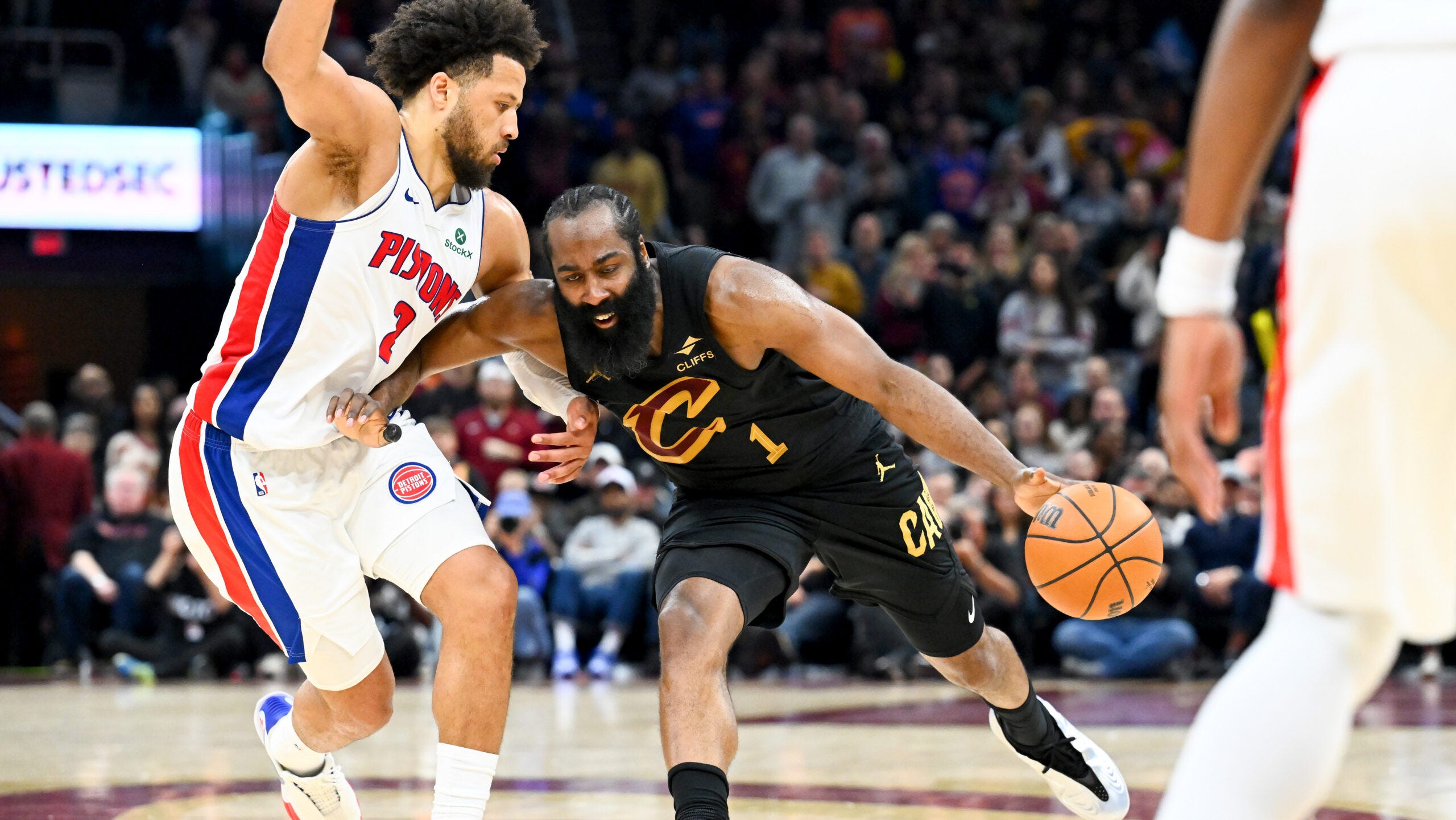
Game 4 was the reverse, a solid first half for Detroit behind a surprising outburst by Caris LeVert to lead at halftime before Cleveland started the 3rd quarter on a stunnig 22-0 run, ending the game in a blink of an eye. Just like that, the series was knotted up and any early planning for the Eastern Conference Finals had to be put on hold. Back in Detroit for Game 5, the Pistons had another decent start but sagged in the third quarter yet again to find themselves trailing. Their stifling defense returned to clamp up the Cavaliers and Detroit eventually built a 103-94 lead with under 3 minutes to play.
[Jason Miller/Getty]
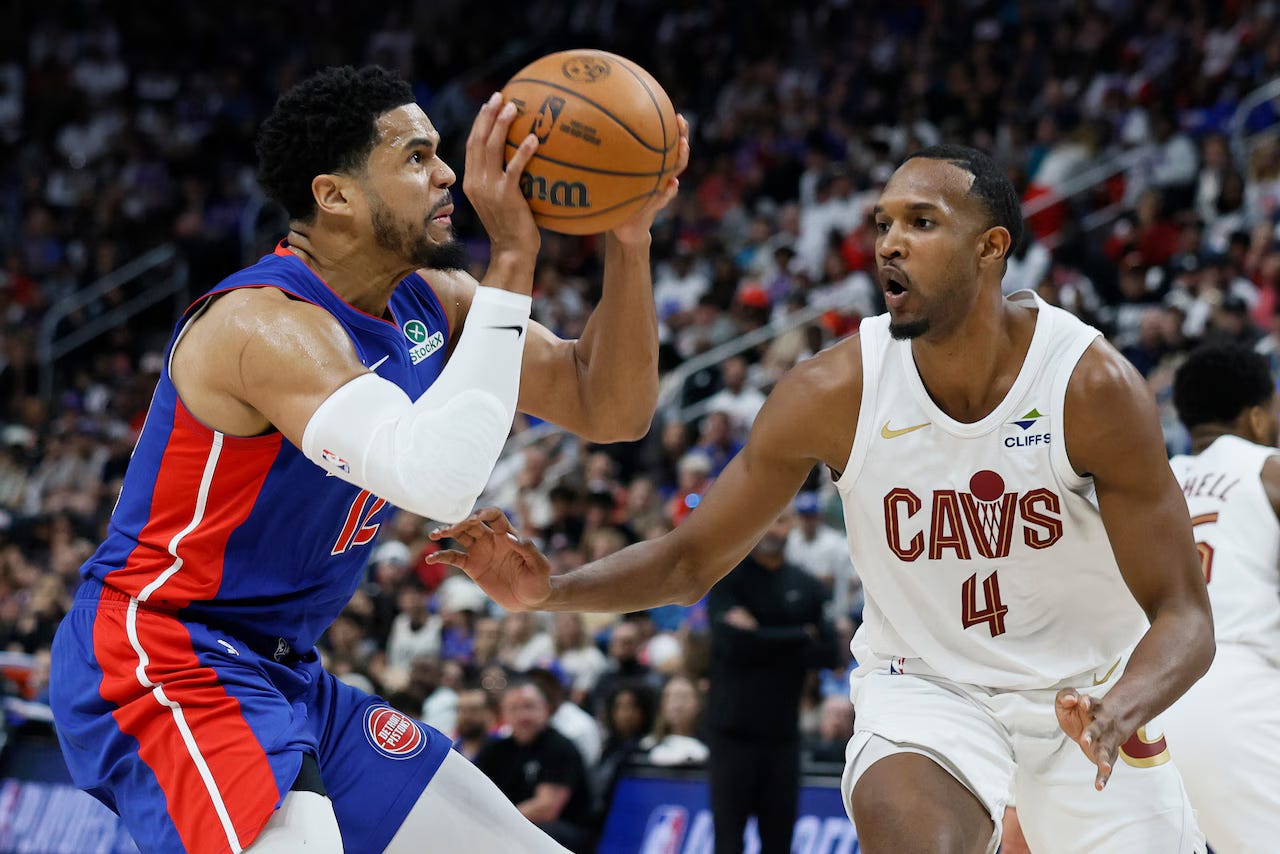
The Pistons realistically needed just one basket or one stop in the final three minutes to wrap the game up and somehow, they couldn’t get it. Cleveland hit a series of clutch shots and Detroit’s offensive limitations were painfully exposed. Tobias Harris’ postseason magic had begun to run out, as he missed a wide open possible dagger, while Daniss Jenkins and Caris LeVert found themselves in situations they weren’t ready for. The Cavs doubled Cade to get the ball out of his hands and his teammates couldn’t deliver. A clutch Ausar Thompson block (and controversial no-call) sent the game to OT, but the Cavs flexed their muscles and rode the momentum to pull off a win.
The series wasn’t technically over and the Pistons showed it wasn’t practically over in Game 6, either. With Duncan Robinson back in the lineup to provide some extra shooting, the Pistons rode their depth and bench to a Game 6 win in Cleveland. Marcus Sasser and Paul Reed had hero moments off the bench, while Jalen Duren, for the first time all playoffs, looked like regular season Jalen Duren. The Pistons didn’t even need a very good Cade Cunningham game to win. The series now sat even at 3-3 and another Game 7 in Detroit was on tap.
Going in, I was feeling pretty good. The Pistons had won two of three at home in the series and the loss was an epic choke, sans Ducan Robinson. With Robinson in the lineup, Duren coming off a strong game, and the home crowd backing the Pistons, I felt good. Not certain, but good. That feeling lasted for all of a few minutes.
Daniss Jenkins made a couple big shots early but no one else looked in rhythm. The offense was sluggish and the defense was surprisingly non-existent. Cade Cunningham looked increasingly worn down and Tobias Harris, who, for much of the playoffs had looked 33 going on 23, now looked 33 going on 43. Jalen Duren had no second performance to build on the brilliance of Game 6 and not even Paul Reed could revive the team.
The Cavaliers clicked on all cylinders and the Pistons had… nothing. The game was over at halftime with Cleveland up by 17. Obituaries were written before the final horn sounded and offseason moves were already being debated. The 2025-26 Pistons got a round deeper into the playoffs than the prior year’s team, but would go no further.
[AP Photo/Duane Burleson]
Game 7 was quite an evening and there was much whining on the internet that night and next day. What you’d expect, really. I didn’t find myself outraged or wanting to post on social media out of fury but I also felt somewhat exhausted by this playoff run. The ups and downs, the Discourse and the narratives. I have been consuming so much Pistons content over the last month or two that when it was all over, I was somewhat burned out. Regular listens, like the Pistons Pulse podcast or the Locked On Pistons podcast had to wait a bit. Writing this piece also waited over a week. I needed a break from the rollercoaster ride of this playoff run.
My feeling as the events of Game 7 unfolded was not fury at the CHOKERS wearing the Piston blue but a feeling of resignation that this team had hit its ceiling. This car had had the “low gasoline” light on the dashboard for a couple weeks, continuing to putter along at 5 mph. Eventually it came to a feeble halt.
The one thing you couldn’t be was surprised that it ended. Just over two weeks prior, the team was down 23 points in the second half while facing elimination. I tweeted about the team in the past tense during that game, so when elimination finally came against Cleveland, it was like the death of a patient battling terminal illness for years. There was no surprise that this flawed team came up short in the playoffs.
Some wanted to rage about getting blown out in Game 7 and look, it’s never a good thing to have happen. But I also think back to last season and how, between these two playoffs, the Pistons have now played 20 playoff games with this core of players. In that time, the Pistons have been run off the floor only once. That series against the Knicks last year was very close, every game being competitive and the total cumulative score line in the series was New York +8.
This year’s first round series against the Magic was equally tight, the only real blowout being Game 7, a game Detroit won. And this Cavs series was consistently tight, the only lopsided game without climax in the 4th quarter being Game 4… a game the Pistons led at halftime! Game 7 was the only true stinker that this core of Pistons players have played and I can live with that. It sucks it was in Game 7 but if it had come in Game 6 and the team had been eliminated right there, would that have been better? Would’ve felt no different to me.
Even incredible teams, like last year’s OKC Thunder (68-14, NBA Champs), got absolutely demolished in Game 6 of the NBA Finals, losing by 17 and having trailed by 30 after three quarters. That was with a chance to clinch the title! The NBA Playoffs contain a lot of games and you’re going to have a game at some point where you don’t have it. Again, sucks that it was in Game 7, but a total clunker was coming.
Especially when, as a Pistons fan who watched most all of the games, I remember games this year like that. There was that stretch in early March where the team was genuinely playing pretty poorly. If you’re not impervious to duds in the regular season, you’re not going to be impervious to them in the playoffs, when the competition is substantially more difficult.
And for those who want to impugn the Pistons’ failure to fight back in Game 7, the one thing I will not do is go down that road. Not about a team that came back from seemingly impossible odds against Orlando. There are a lot of questions about how this team is constructed, but the one thing I will never doubt is their heart and their fight. That they went out in that fashion on home court to me was further proof that they were out of gas. That the hard ceiling had arrived.
[Sue Ogrocki/AP Photo]
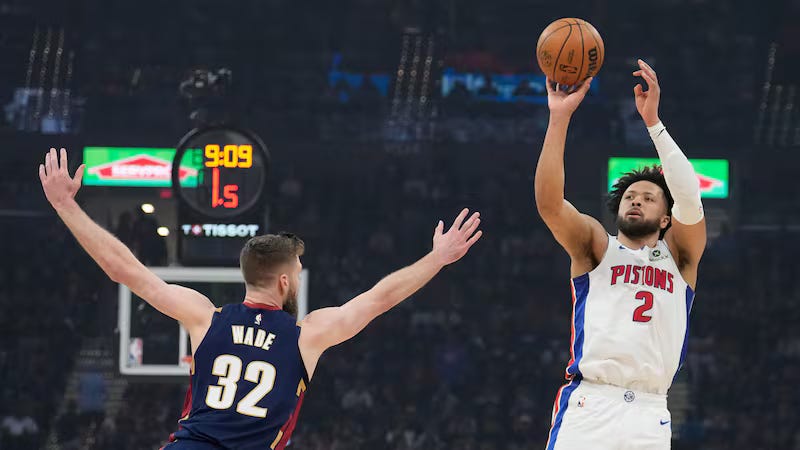
As Game 7 was unfolding, I went to look up the minutes numbers across the NBA for the playoffs. Very quickly, my suspicions were confirmed when I found out that entering Game 7, Cade Cunningham had played 46 more minutes than any other player in the playoffs. Even if you just look in this series, his ball-handling counterparts of Cleveland (James Harden/Donovan Mitchell) were playing ~36 minutes per game, while Cade was regularly having to play over 40. While wearing a flak jacket to protect what we learned after the season were fractured ribs. While having just recovered from a collapsed lung.
There are critiques to be made in Cade’s game and I will happily make them but it’s also clear that the Pistons asked him to do far too much. Had Detroit closed out Game 3 or 5 and won the series, it’s hard to imagine that a matchup with these buzzsaw Knicks wouldn’t have looked a lot like what Games 6 and 7 did, with a worn-down Cade looking increasingly sluggish.
Likewise, there well be no complaining from me about Tobias Harris struggling in the latter half of the Cleveland series. Yeah, Tobias sucked from Game 4 onward but also, what were you expecting? Did you think 33 year old Tobias Harris was going to continue to give you 20 points per game on efficient shooting and physical defense for several more rounds? Tobias rose to the occasion in heroic fashion against Orlando, when the Pistons desperately needed it amidst Jalen Duren’s malaise, and he will always have my respect for that. It was never going to last forever.
And the rest of the team remains the hodgepodge of imperfect pieces they had been. The total lack of creation outside of Cade Cunningham showed up in spades. The iffy shooting did too. The Pistons got individual games from guys like Jenkins, Sasser, and LeVert, but also plenty of ugly moments too. In winning 60+ games, the Pistons overachieved the talent on their roster, but in the end, a balance was restored.
If you had said before the season that the Pistons a) eclipsed 50+ wins, b) beat Orlando in the first round, and c) lost to Cleveland in the second round, every single Piston fan would have been pleased. We know from the Cavs series that theoretically, winning another round was possible had the Pistons been slightly better in the clutch of Games 3 or 5. But the ride likely would’ve ended there and as a whole, it’s hard to argue that the Pistons left much meat on the bone.
The season that unfolded was likely the 95th percentile out of all outcomes you could’ve imagined this roster having. I can live happily with that. It’s hard to remember how bad the vibes were when the Pistons made no “flashy” moves last offseason, lost Malik Beasley out of nowhere under bizarre circumstances, and tried to frantically piece a roster together.
Then they lost to a bad Chicago team in the opener and got crushed by Cleveland in the third game. Everyone would’ve been happy with this outcome at the start of the year, so I’ll be happy now. While still being cognizant that the much more difficult part is improving the roster to raise the ceiling.
[Nathan S. Butler/Getty]
I said at one point during the Orlando series that I wanted to win the first round to get the opportunity to watch another series and collect more data on this group almost as much as I wanted to win just to win. Trajan Langdon always framed this season as an evaluation season and I viewed it the same way. The epic comeback means we got seven more games of playoff evidence, and so with 96 total games of regular season and postseason in 2025-26, how do we feel?
Amazingly, I don’t really know. The playoffs, to some extent, raised more questions than they answered. My feeling going into the postseason was that Jalen Duren’s growth had cemented him as a core piece on this team worthy of a sizable extension. After all, he ranked top 10 in nearly every analytical metric in the regular season, poured in 19.5 points per game on elite efficiency, remained a great rebounder, and the Pistons were 6.0 points per 100 possessions better with Duren on the court than with him off it. For his regular season efforts, Duren was named Third Team All-NBA.
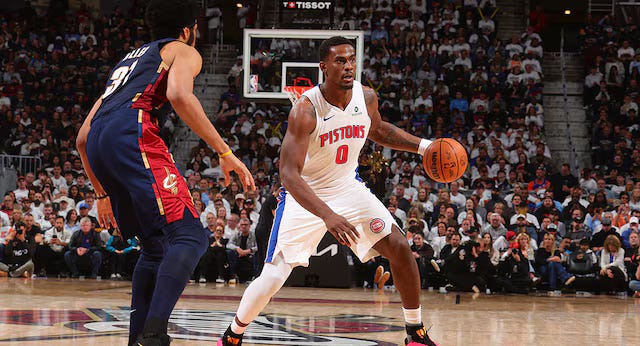
But the playoffs? I don’t know, man. Duren’s scoring output was dropped nearly in half and his efficiency plummeted. Outside of that Game 6 against Cleveland, all of the shot creation and off-the-dribble scoring growth we had seen in the regular season vanished. His defense sagged as his offense declined and the Pistons were 9.4 points per 100 possessions worse with Duren on the floor in the playoffs. It’s not completely determinative, but it’s also quite worrying.
I continue to have complete faith in Ausar Thompson as an all-time talent as a wing defender who would win DPOY awards if Victor Wembanyama didn’t exist. He’s a good basketball player who makes you better, as he was yet again a positive in the on/off splits, as he has been in every regular season and every playoffs of his career. But man would the discussion be much different if Ausar could grow offensively. The Pistons seemed to abandon the plans of growing Ausar as an on-ball creator after he got banged up early in the season and the result is a player that is still disconnected from the offense, who can’t shoot and not as good as he should be at the rim.
Ron Holland grew as a defender in the regular season but showed little growth as an offensive player and yet again was frozen out of the playoff rotation. Daniss Jenkins, the surprise story of the year, had great moments in the playoffs but his overall stat line for the postseason was brutal. The Pistons, much like the Detroit Tigers of 2024-25, have a lot of useful players who do specific things but only so many actual cornerstone players. It’s a blessing and a curse to have the depth that Detroit enjoyed this year but it makes roster building difficult.
There will be more time to debate these roster building questions in the future. There’s a whole ‘nother month before the 2026 NBA Draft, where Detroit has a quietly important pick at 21st overall after the pick swap trade that jettisoned Jaden Ivey at the deadline. And then another week after the draft before free agency begins. I will certainly write another piece or two on the Pistons before then because this is a pivotal summer for the roster construction moving forward.
But for now, I will simply leave it as it stands. Despite all of the questions, there are a few things we know and those things are good. Cade Cunningham, despite the physical ailments, had a stellar postseason. His three point shot looked the best of his career, scoring nearly 29 points per game and doing it while posting insanely positive on/off splits. There are areas to improve on for sure but he’s a consensus top 10 player in the NBA and is still probably a few years from his peak.
They have a good team culture and play hard in a league that doesn’t always value it. There are a lot of solid players on the roster and lots of flexibility moving forward, with full command of a lot of picks. No matter what happens in the offseason, the Pistons ought to enter 2026-27 as one of the top projected teams in the East. That’s a good starting place to be in. Now we find out what comes next.