The Worst Case Scenario
Catching up on the 2026 Detroit Tigers

If, for some reason, you only get your news about the Detroit Tigers from this Substack, 1.) I would like to meet you in person, and 2.) you might be surprised when I tell you this: the Detroit Tigers are the worst team in the American League. This would surprise you because the last time I wrote about the team, mere hours before Opening Day, I swallowed concerns I had in spring training and predicted a moderately rosy record.
I said “regular season results are more meaningful than spring training and there are enough good players here that they should be a little better than last year in terms of raw talent”. And in the context of a weak AL Central, that seemed like it should be enough to win the division and finish a bit above .500. I predicted 90-72, which probably was a game or two in the “too sugary” direction1 but there was pretty broad consensus of success. The advanced projections and the pundits across the board thought the Tigers were the best team in the AL Central coming into 2026.
The season started okay, a pair of wins over a solid Padres team in San Diego but then the first warning signs were registered. After losing the final game of the series, the Tigers were swept in Arizona by the DBacks. Getting swept by a good-ish, while not ideal, isn’t the end of the world. But a massive blown lead in the second game by the trio of Drew Anderson, Will Vest, and Kenley Jansen (up 5-1 in the 8th turned into a 7-5 loss) was the first warning sign that something wasn’t right. Even counting the end of season collapse last year, the 2025 Tigers didn’t blow many games in that fashion.
Getting shutout in the final game of the Arizona series despite seven hits and boatloads of opportunities to score was another warning sign about the state of the offense. Things sputtered from there, as the team won the first two at home against St. Louis before losing the final game and then the Tigers were swept in four games in Minnesota against a Twins team expected to be one of the worst in baseball. At the conclusion of that series, which wasn’t all that competitive, the team was 4-9 and panic was in order.
Yet the ship then steadied. The Tigers proceeded to rip off six in a row, culminating in a dramatic comeback win against KC and then took 2 of the first 3 against Boston to go to 12-10 on the season. After Spencer Torkelson hit a walk-off HR to take the rubber match from Milwaukee, Detroit was 14-12 and despite the early bumps, and a collection of already-mounting injuries, the club was in first place and alive and well.
The next game was in Cincinnati on a Friday night. Early offense gave Detroit a 5-0 advantage. Unfortunately, starter Framber Valdez then wobbled and had to leave the game early, but the bullpen still should’ve been good enough to get it done. They weren’t. Will Vest came on in the bottom of the 7th and immediately gave up a walk and a homer to tie the game at 5. After a single and a pair of outs, AJ Hinch went and got Brant Hurter out of the pen, who induced an inning-ending groundout… that Javier Báez bungled, leading to two more runs scoring in the inning.
Detroit was now down 7-5. Of course, it couldn’t actually be over. Spencer Torkelson and Kerry Carpenter combined for 3 RBI across two HRs in the top of the 8th in a game that was now taking place near-midnight after an earlier rain delay and the Tigers went back ahead 8-7. Drew Anderson worked a 1-2-3 bottom of the 8th and Kenley Jansen recorded the first two outs of the 9th. One strike away from winning, he allowed a single to Spencer Steer and then served up a meatball to Nathaniel Lowe, who hit a 2-run walk-off HR. 9-8 Reds.
Beginning with that game, the Tigers are 9-26. Even more disastrously, they are 5-21 since taking 2 of 3 from Texas in early May. The wheels have completely come off the car one might say. Injuries, mental errors, and plain ole poor play have wrecked the team in a way that is fairly surprising. I had my worries about certain aspects of the team and thought they could underperform the lofty expectations everyone had set. But even I did not foresee almost everything going wrong and the team siting with a 23-38 record through 61 games. Indeed, what we have on our hands is a worst case scenario.
Back in the season preview, I did what I usually do in those sorts of pieces and sketched out the best and worst case scenarios for the team. About the worst case, I said the following:
The worst case is dud seasons from Flaherty and Mize, while Verlander is old and creaky. The Anderson/De Jesus bets don’t pay off and the Tigers are scrambling for pitching depth again, while the pen struggles without elite swing-and-miss stuff. McGonigle isn’t quite ready for the show, Torkelson flops back to his 2024 form, injuries impact a few hitters and the team’s offense sputters to a below average finish. With subpar pitching and iffy hitting, the team limps along and by mid-season, Skubal trade talks are dominating the discourse. It’s the franchise’s biggest disappointment since 2008¹ and the Tigers take 3rd in the division with 78 wins.
There are some deviations from what has actually occurred but man, on the whole, that feels pretty accurate. This paragraph is not a bad starting place to begin to deconstruct the issues that the Tigers are experiencing, so let’s go through what ails this team piece-by-piece.
[Nick Cammett/AP]
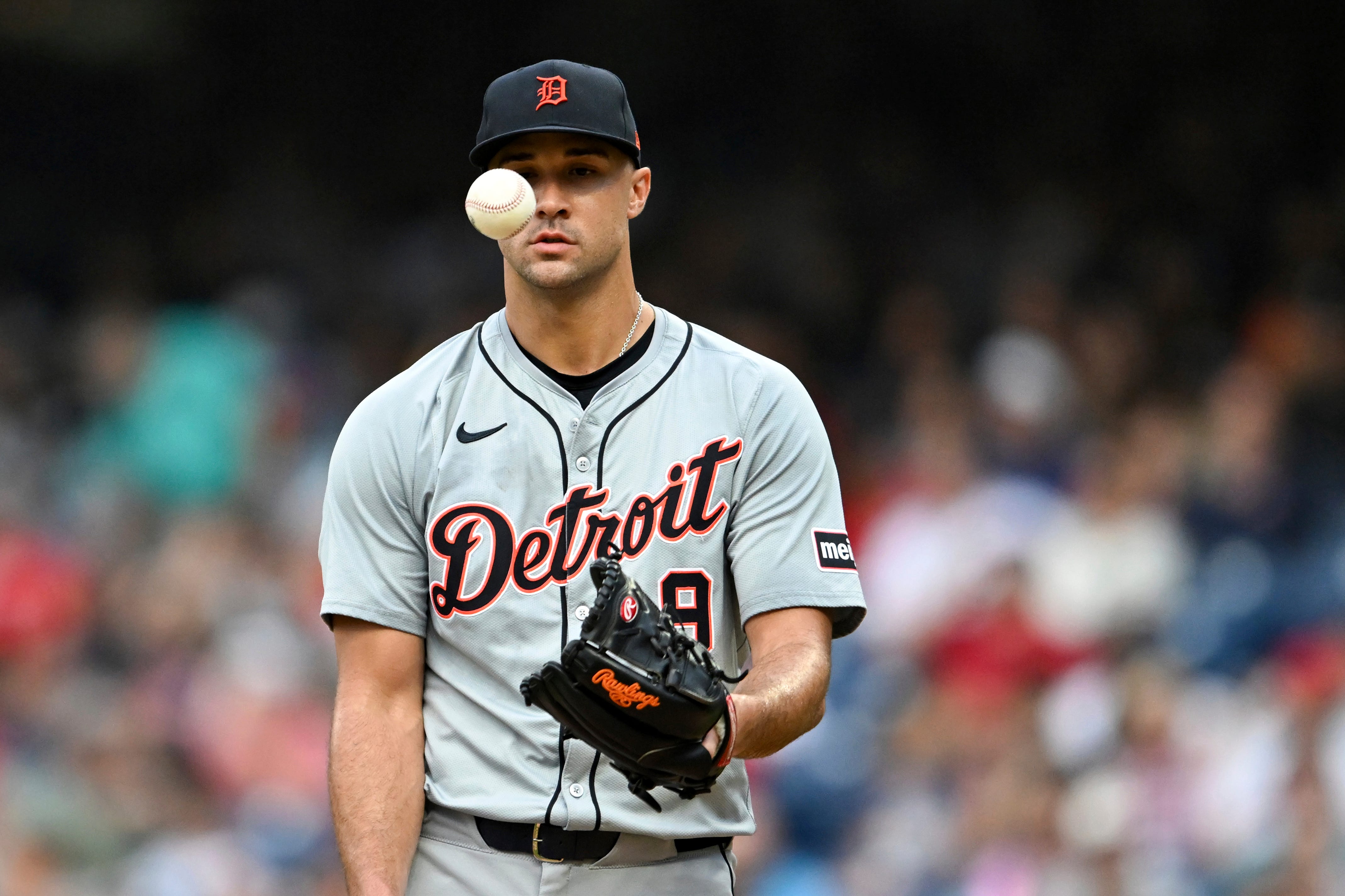
STARTING PITCHING
The first line looks at starting pitching and I will say that this area is the least culpable for me. My doom prediction was wrong about Mize, who hasn’t been a dud but is instead pitching the best ball of his career. Unfortunately, he’s pitched only nine games comprising 47.2 innings due to injury. I was right about Flaherty, who has been a total disaster, currently on track to lead the AL in losses for a second-consecutive season with an unfortunately exceptional 0-7 record + a 5.81 ERA, a 1.61 WHIP, and a soaring BB/9 of 5.1. The Tigers are 2-10 in games started by Flaherty this season.
Injuries have also afflicted Tarik Skubal and Justin Verlander, the former of whom was his usual self and the latter of whom was underperforming even my description of “old and creaky”. JV made one wretched start against Arizona and then landed on the injured list and hasn’t been seen since. Framber Valdez hasn’t been awful but is coming in a bit below expectations. Most of his starts have been fine but a couple ugly outings (one of which ended in a rage-suspension) have bloated his ERA.
Despite this flood of injuries, the starting pitching has held up fine. Detroit’s starting pitching ERA is 9th in the MLB thanks to the pitching depth stepping up. Keider Montero has pitched the best baseball of his career and Ty Madden has chipped in a few acceptable starts. I really have little to complain about here other than they’ve shouldered adversity in the rotation fine. It’s every other part of the team that’s a calamity.
[David Guralnick/Detroit News]
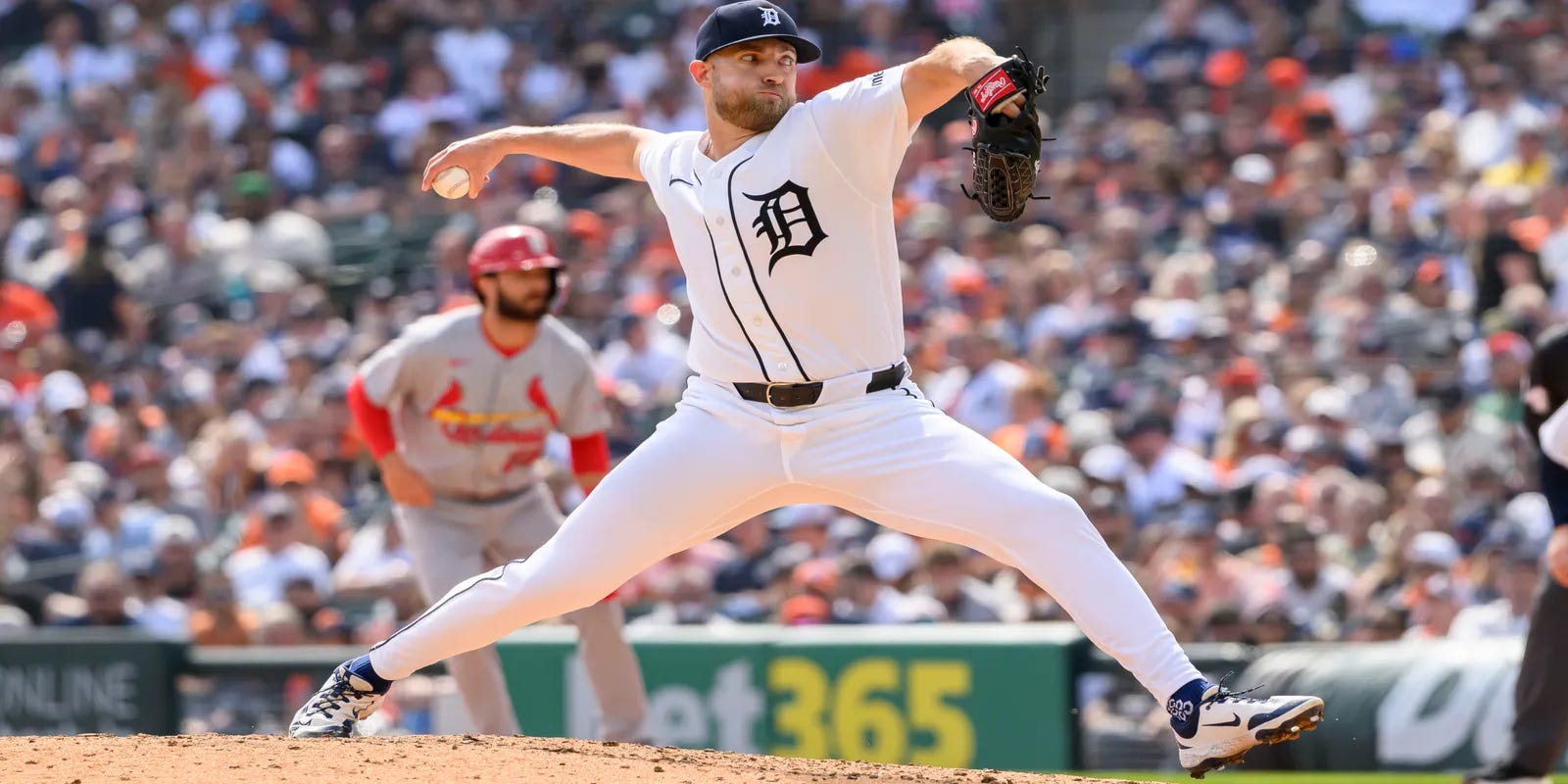
BULLPEN
The next sentence in my paragraph from the season preview looks more prescient. I was probably too excited with how Enmanuel De Jesus had looked in the spring, but he was genuinely awesome in the WBC and in spring training. Instead, there was no turnaround or growth. De Jesus, who hadn’t been an MLB caliber pitcher before, is not an MLB caliber pitcher now. His 5.91 ERA is worse than the peripherals say but it’s not like the peripherals are good.
The Drew Anderson bet had a painful adjustment window but has improved in the month of May and he’s been a relative bright-spot in the bullpen. On the season, Anderson boasts a 4.03 ERA, 3.71 FIP, 1.26 WHIP, 10.9 K/9, and the peripherals are quality. Not incredible, but solid enough.
The Kenley Jansen addition has gone less well, as Father Time might have caught up to the 38-year-old. His HR rate and BB rate are the worst of his illustrious career and the 5.80 FIP offers no comfort to the idea that his 4.80 ERA is a fluke. Jansen has already cost the team three games on his own, the aforementioned Cincinnati loss, one a few days later against Atlanta, and then another walk-off HR allowed recently to Baltimore. Altogether, the three additions to the pen have not paid dividends.
Meanwhile, usually steady options have also gone south. One of the more consistent relief pitchers in baseball the last few seasons had been Will Vest but despite still-solid peripherals, the results have turned into a catastrophe. Vest’s ERA sits at 7.23, with three blown saves himself. Tyler Holton hasn’t been effective either, with a 4.23 ERA/1.37 WHIP that sits far off the brilliance of his 2023-24 self. Kyle Finnegan’s results have been far better but every underlying metric is flashing red, with 19 BB to 16 K for a 4.90 FIP and a 1.54 WHIP.
My prediction about the team scrambling for pitching depth remains true, as injuries to Brant Hurter, Burch Smith, and even Jansen have forced 6.1 Ricky Vanasco innings on us against our will. Although, as bad as some of this seems in the bullpen, the relief pitching hasn’t been terrible on the whole. It’s just been TERRIBLE when the team has needed it the most. The Tigers’ relief ERA of 4.45 isn’t good at 20th out of 30 MLB teams, but their 16 blown saves is tied for worst in the MLB. Their 17 losses charged to relievers is also worst in the sport. The team is 6-13 in one run games (worst in the MLB) and they have lost 21 games they were leading at some point, three more than any other team as of Sunday and almost 10 more than the MLB average.
Detroit’s relief pitching has been good when it doesn’t matter but it turns into the “who wants to choke this time” carousel when it does matter. And the villain is always rotating. One night it’s Will Vest, while Finnegan and Jansen are good. The next night Finnegan and Vest are good but Jansen blows it. And the night after that Jansen and Vest are good but Finnegan blows it. And on Sunday, Anderson blew it. And if that weren’t bad enough, sometimes multiple guys blow it. Maddening.
[Paul Sancya/AP]
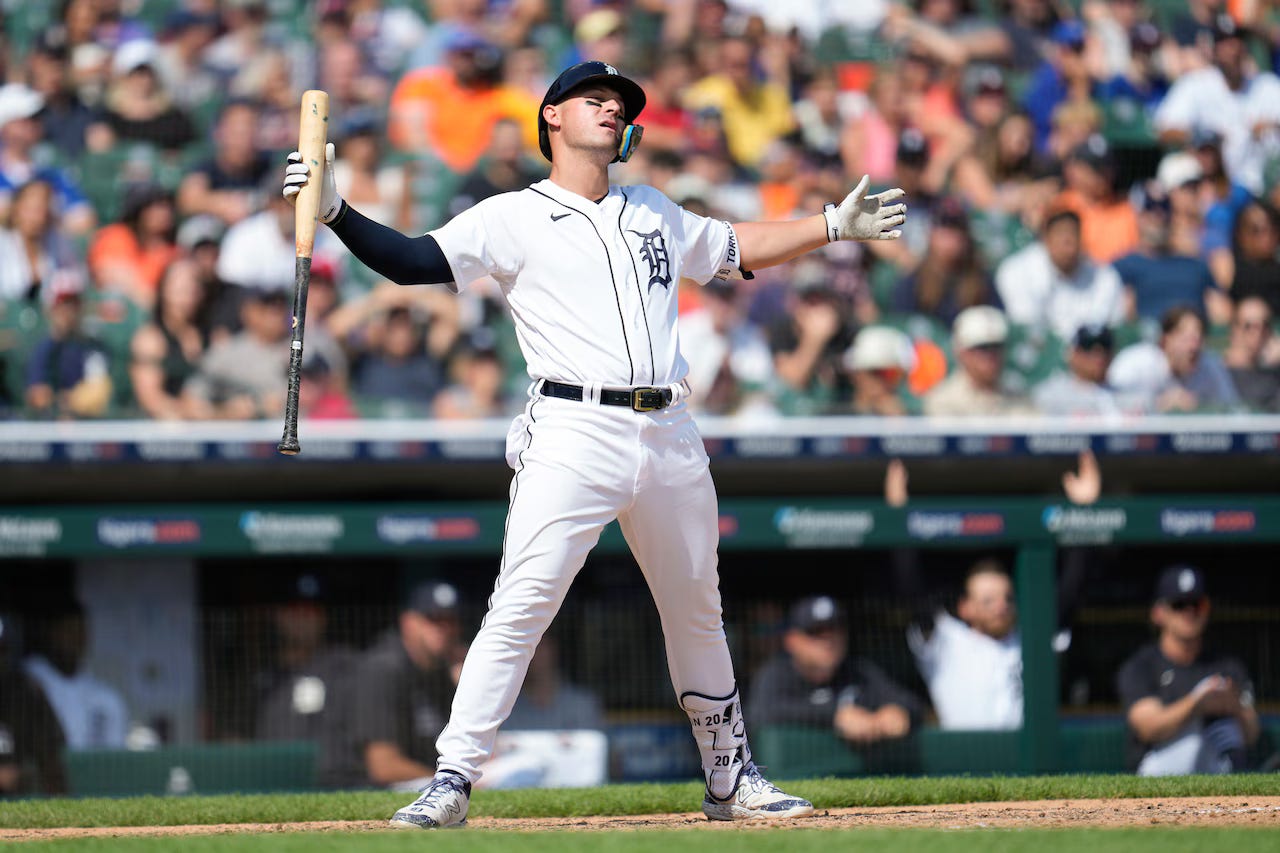
OFFENSE
But the biggest culprit for the team’s meltdown is neither the relievers nor the starters but the offense. Detroit is 27th in OPS, 25th in average, 21st in OBP, 26th in SLG, 20th in HRs, and 30th (dead-last) in runs per game. They still strike out too much (9th most) and almost never steal bases. This offense, like so many of the past Detroit Tigers seasons of the last decade, is terrible.
It is probably even worse than my paragraph predicted but it got there in a similar manner. Kevin McGonigle was actually ready for the show, unlike what I predicted in that scenario, but Spencer Torkelson has indeed flopped back to his 2024 form and injuries have played a role. There are some bright spots. Even as McGonigle learns to navigate the MLB and deals with the growing pains, he’s been an above average hitter.
Riley Greene has scarified his power to bring his K rate down but his batting average is way up. A sky-high BABIP suggests there’s some luck there but his underlying numbers are strong. Dillon Dingler has been a great two-way force, pairing his usually elite defense with an above average bat that also contains the most power on the team (13 HR). Those three players have played at an All-Star caliber pace so far.
The issue is that outside of those three players, the remainder of Detroit’s roster of position players has played horribly. Gleyber Torres should probably be spared from this, because the nose-dive also began around the time that he went on the injured list. Kerry Carpenter was also hitting okay but his defense had regressed and he has also been injured. But if we look at just the group that played most of May, excluding the three good starters and those two injured players, the other 10 bodies are currently worth -5.8 bWAR/-3.2 fWAR.
9 of the 10 are negative players in bWAR, while fWAR is a little kinder, with Spencer Torkelson and Colt Keith narrowly positive and Zack Short worth 0.0. Some of those 10, like Hao-Yu Lee, Gage Workman, and Short have been forced into action due to injuries to players like Torres and Javier Báez. But their poor play has exposed a lack of depth in the organization. Not to mention that it’s not like Javy was lighting it up before getting hurt.
Some of the performances have been foreseeable, like my line about Torkelson flopping back to his 2024 form. Tork was so bad in spring training that it wasn’t hard to see this happening. His overall numbers offensively don’t look catastrophic but outside of a five game stretch in April where Tork homered in each game, his batting average is ~.185 and his OPS is <.590. We can’t just ignore the games where he was good, of course, but the point is that in 56 of 61 games, his bat has been among the worst in baseball. And when you blend that with defensive metrics that continue to hate him, it’s not a good picture.
Likewise, after a strong first couple weeks, Colt Keith’s hitting has tailed off. And the whole time, his power has completely abandoned him. Keith’s OPS in May was .547, with 2 XBH in 77 PAs. Keith hit 27 HRs in the minors in 2023 in 126 games yet now he’s a Punch & Judy hitter at the MLB level. He’s incapable of pulling fly balls and seems to have changed his plate approach in the hopes of being Luis Arráez, which just isn’t that valuable. And Keith has never been known for his defense, so if he’s not hitting, what is he giving you? Nothing, really.
The rest of the performances are ugly and more predictable, I suppose, but the scale of the suckage is still surprising. I put in my preview that Zach McKinstry had no hope of replicating his 2025 performance but as it stands right now, he’s hitting much worse than he did in 2023 or 2024, when he wasn’t a good hitter to begin with. That is a trend that’s true for Matt Vierling, Wenceel Pérez, and Jake Rogers. None of these players were expected to be great hitters, but they’re hitting miles worse than the already uninspiring expectations based on their careers.
To demonstrate, Tigers blogger Chris Brown looked at the preseason expectations put forth by the projection models for players on the team. Dingler, McGonigle, and Greene are above expectations, Gleyber and Carpenter are a little below, and everyone else is substantially below expectations, with Wenceel, Rogers, McKinstry, and Jahmai Jones being in “horrifying” territory:


The massive underperformances of ~1/3 of the roster, combined with the stalled progress of Keith and Torkelson, on top of injuries deleting two of Detroit’s only decent hitters for most of May and replacing them with guys who can’t hit, has created a hapless offense. In the month of May, Detroit’s offense was the worst in the MLB by OPS+.
DEFENSE/COACHING/LACK OF DAWG
The craziest thing about this team isn’t even the hitting, but the defense. Reminiscent of the Detroit Lions’ usually strong special teams suddenly being bad in the 2025 season, the Detroit Tigers’ usually solid defense is now awful. In 2024 the Tigers were 5th (+50) in Defensive Runs Saved per Fielding Bible and in 2025 they were 9th (+36). This season the team is 28th, third-to-last, at -18. What? Why? How? The only new player on the fully-healthy team is Kevin McGonigle. Everyone else is the same. Why did the same roster of players suddenly go from good defensively to abominable?
I don’t have an answer but this isn’t a case of the #nerd stats playing tricks on the Watch The Games guys. If you watch the games, the poor defense lines up alright. There was the Báez error in the Cincy game I recapped. There was Wenceel Pérez’s botched fly ball against the Angels last week, leading directly to Will Vest blowing the game. There was Matt Vierling lollygagging getting the ball in from center field, also against the Angels, allowing a runner to score from first on a single(!!!). Hell, even in a contest Detroit won last night in Tampa, there were ugly fielding snafus that nearly cost them the game.
I don’t know where this came from, but it hasn’t made life easy on an already struggling bullpen. Likewise, base-running has been poor too. The Tigers have made 24 outs on the bases, most in the AL, while being a team that hardly ever steals bases. Fangraphs has them among the worst base-running teams in the league cumulatively. When you put the defense alongside the base-running, you see a team that just looks poor on the fundamentals.
Which is bizarre, because the one thing I always have said about the Tigers under AJ Hinch is they were strong on the fundamentals. They have never been the most talented team in the MLB to say the least, but they usually play the right way. This season they remain “not the most talented”, but also are playing sloppy and without fundamentals. That just cannot happen. This team doesn’t have gobs of All-Stars and future HOFers to get around the fact that they are bad on the bases and bad in the field the way the 2011-14 Detroit Tigers did.
AJ Hinch isn’t totally to blame for the loss of fundamentals (players have to own some of it too), but it doesn’t reflect well on coaching. And it also doesn’t help that Hinch’s error rate as a manager seems to be increasing too. I have no way to track this objectively but in past seasons I felt that Hinch very rarely made a decision that I disagreed with strongly. But beginning during the late season collapse, the number of decisions I (and other fans) have felt to be odd has increased significantly.
This culminated in the mind-numbing decision to take Keider Montero out of the game on Sunday with only 65 pitches thrown, only to hand the ball to this nightmarish bullpen. A bullpen that, as everyone expected, blew the game in the span of only a few batters following the pitching change. The incessant pinch hitting is not working and it’s hard not to wonder if the franchise’s desire to train players to play multiple positions rather than focus on one position has led to some of the defensive issues.
All of the problems outlined in this section have contributed. The bullpen’s depth has been tested and no one can step up in big moments. The starting pitching has managed its best but is still beset by injuries. The offense has also been hamstrung by injuries but is constrained even moreso by a large chunk of the lineup all having career-worst seasons at the plate. The team suddenly can’t field or run the bases smartly. It’s a sloppy, poorly prepared team playing without focus or precision and they have now put themselves in a massive hole to try and dig out of.
Their playoff odds aren’t 0% but they are low now. Almost everything that could go wrong has gone wrong. In ways that were both foreseeable and not at all foreseeable. As we always say, you can’t make the playoffs in April/May but you can miss them in April/May. That’s more or less what has happened to the Tigers.
So, this team sucks. They are unlikely to make the playoffs. What now? Despite the (understandable) doom and gloom from much of the fanbase, I don’t think the team should sink back into the abyss of the Al Avila years and embark on some 10 year rebuild. For one, this team is better than its record, as most of the fancy stats and even something basic like the Pythagorean Theorem show. Despite how many things have gone wrong, if the team was better defensively (like they were in 2024/2025) and the bullpen choked only half as much (still would be a lot of blown saves!), they’d be within earshot of the wild card.
And as we project things forward, there are things to like. The three good position players (Dingler, McGonigle, Greene) are a nice starting point, as all are young and have years of team control. Troy Melton seems like a promising young arm, I don’t mind Keider Montero as a back-end option, and Jackson Jobe should be back from injury at some point too. If he were ever healthy, then Reese Olson would be another rotation piece with lots of team control.
Detroit doesn’t have much money on their books long-term, as the Báez deal has only one more season remaining and even the Framber Valdez deal lasts for only two more years (assuming he picks up the player option). There’s a lot of maneuverability, alongside an acceptable farm system, albeit one that needs to improve. Things weren’t as rosy as they seemed in June 2025 when I declared the team among the healthiest in the MLB (at the time, they had an elite record and an elite farm system). But they also aren’t as hopeless as they seem now.
My concern, however, is a similar one to what I’ve expressed with the Red Wings in various columns: do they have the right management to make the necessary moves? I have generally defended Scott Harris against what I felt like was unreasonable levels of hatred from fans that did not line up with the team’s record. I still will do that against some of the comic levels of vitriol seen in the fanbase.
I saw comments this week on various platforms comparing Harris to Matt Millen. To which I say… come on, man. The Detroit Lions were 31-84 with Matt Millen as their GM, and proceeded to go 2-27 in the next 1.75 seasons after his September 2008 firing because of how deep into the abyss Millen had driven them. The Tigers were 251-235 with two playoff appearances in the first three seasons under Scott Harris. These two things are not remotely comparable.
But that isn’t to say that there aren’t flaws in the process. Nostalgia bit me when I didn’t condemn the Justin Verlander signing despite having written a few months earlier that he infatuation with old starting pitchers needed to end. Welp! The regime has consistently mis-allocated money when it comes to starting pitching, which is a big problem. They are likely too focused on “internal improvement” when not enough hitters have developed under the current coaching staff. Changing the player development/coaching staff on the hitting side would probably be a good idea. They also probably need to take bigger swings on pro hitting talent.
Maybe this year is a needed lesson to be learned by the management of the Detroit Tigers, that a recalibration in approach is necessary. Barring some exceptional turnaround, this team should be a seller at the trade deadline and that’s where some decisions have to be made. If the plan is not to retain Tarik Skubal or honestly, even if you want to try and sign him in free agency, he probably should still be traded.
Scott Boras is going to guarantee that he goes to market no matter what and with the Tigers not heading to the postseason, a trade is likely a must. Skubal should bring back one of the larger hauls ever seen for a rental, with the David Price deal in 2015 (one blue chip prospect + another fringe top 100 guy) being a benchmark to be exceeded. That’s worth more than the compensation pick you could possibly gain if he were to be lost in free agency, so it must be done.
Other trade candidates include Casey Mize, if he were ever healthy. Gleyber Torres as well, if he can return to the lineup and show solid play before the end of July. Kenley Jansen probably doesn’t have much value if healthy but that’s another expiring contract. I doubt that Jack Flaherty has any value at all but the Tigers did trade for Charlie Morton last year so who the hell knows. Unless the team goes on the heater of the century in June, prepare to flip your expiring contracts at the deadline to re-stock the farm system some and begin looking to build a team around McGonigle & friends. That ought to be the focus moving forward.
What’s unfolded this season is a huge disappointment, akin to the 2008 season that I referenced in the season preview worst case scenario blurb. But those of us who lived through that era recall that the Tigers managed to change their approach after 20082 and it led to a run of four straight division titles from 2011-14. A change in approach is necessary from Scott Harris to AJ Hinch to everyone in the pro scouting and player development departments. What unfolds over the next couple months and whether this team shows any fight until the trade deadline will tell us a lot about the extent of the changes that are going to be needed.
as I put in the piece, my original projection was 88-74, which was almost exactly the Vegas line (O/U was 86.5 or 87.5 depending on the book you looked at), but after writing the piece I talked myself into going a little bit higher.
Notably, they improved their pitching and moved away from some of the Retirement Home players they had chased (Kenny Rogers, Gary Sheffield, Todd Jones, Edgar Renteria)